
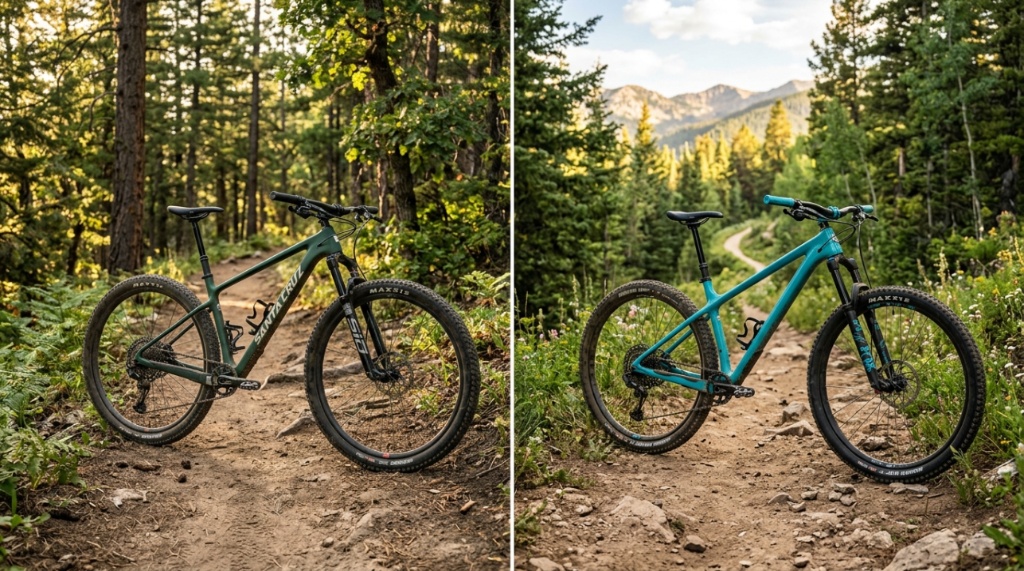
To compare budget mountain bikes like a pro, start with fit, brakes, and tires—then score drivetrain reliability and fork quality as secondary factors. A Budget Hardtail Mountain Bike often wins on value because your money goes into parts that affect safety and control. Use this Mountain Bike Review framework to avoid being misled by gear-count marketing.
Most “comparison” advice fails because it tells you to look at everything—geometry charts, brand tiers, suspension travel numbers—until you’re overwhelmed. Then you make the easiest decision: the bike that looks coolest or claims the most features. That’s exactly how buyers end up with unstable sizing, weak brakes, or tires that slide on the first corner. This pro-style comparison method is simple on purpose: it forces you to evaluate what changes your ride experience immediately.
What should you compare first when looking at budget mountain bikes?
Direct answer: Compare size/fit first, then braking performance and tire suitability—those determine confidence and safety more than any other specs.
If a bike doesn’t fit you, it doesn’t matter how good the parts are. If the brakes and tires are weak, you’ll ride less and feel less safe.
How do you compare fit without getting stuck in geometry charts?
Direct answer: Use the size chart, confirm comfortable standover and reach, and test ride for stable handling at slow speeds.
- Standover: Comfortable straddling
- Reach: Neutral shoulders, soft elbows
- Standing control: You can stand and move without feeling trapped
People also ask: If two bikes are the same size, will they fit the same?
Direct answer: Not always—geometry varies by brand and model year, so a quick test ride or cockpit check can reveal big differences.
How do you compare brakes on a budget mountain bike?
Direct answer: Compare stopping power and lever feel; hydraulic discs are the benchmark, but any brake must feel consistent and controllable.
Quick brake checks:
- Levers should not pull to the handlebar
- Stopping should feel predictable, not sudden or weak
- No grinding or heavy vibration under braking
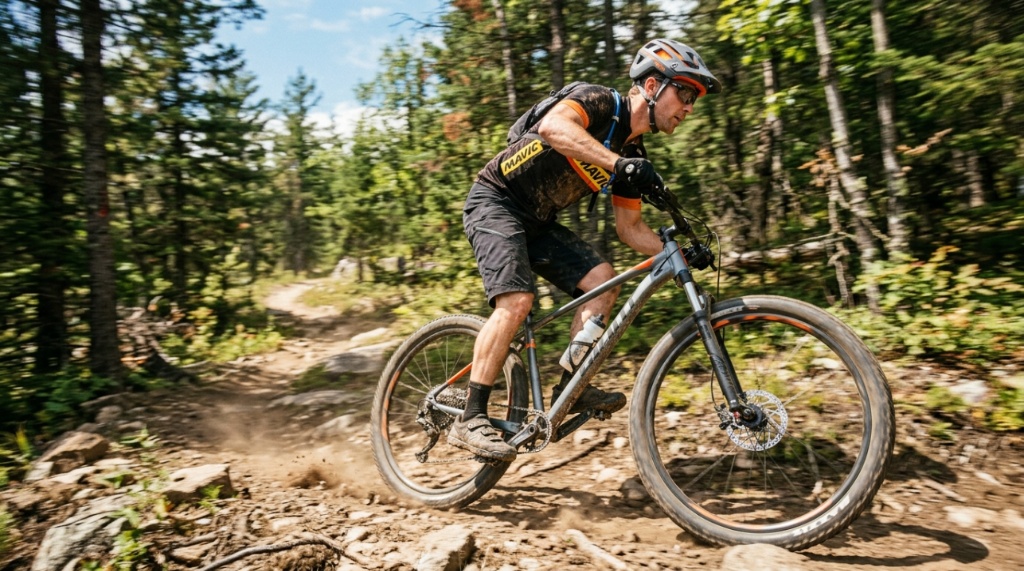
How do you compare tires like a pro?
Direct answer: Compare tread pattern, rubber feel, and width relative to your terrain; tire pressure range and casing support are key for trails.
Pro tip: the “best tire” depends on soil. Hardpack needs faster tread; loose corners need side knobs; wet needs wider spacing.
What drivetrain details matter in a mountain bike review?
Direct answer: Clean shifting under load and part availability matter more than the number of gears.
- Test shifts while pedaling moderately hard
- Listen for skipping or chain noise
- Check for worn teeth on used cassettes
How do you compare suspension forks on budget bikes?
Direct answer: Compare smoothness, control, and serviceability—not just travel numbers.
Fork checks:
- Compress the fork: it should move smoothly without clunks
- Look for oil near seals
- Ask if it’s serviceable and if parts are available
What’s a simple pro scoring system for comparing budget mountain bikes?
Direct answer: Score each bike on fit, brakes, tires, drivetrain, and fork—then choose the highest score that fits your budget.
| Category | Score 1–5 | What a “5” looks like |
|---|---|---|
| Fit/size | __ | Comfortable reach, stable handling, good standover |
| Brakes | __ | Strong, consistent braking (ideally hydraulic discs) |
| Tires | __ | Trail-appropriate tread + usable width + good compound |
| Drivetrain | __ | Shifts cleanly under load, usable climbing gear |
| Fork | __ | Smooth action, no leaks, serviceable |
Want a quick benchmark for what a budget hardtail typically offers (and how reviewers evaluate value)? This Budget Hardtail Mountain Bike reference is useful for sanity-checking common specs.
What mistakes do people make when comparing budget mountain bikes?
Direct answer: They overvalue gear count and suspension travel, and undervalue fit, brakes, and tire quality.
- Buying the wrong size because it’s discounted
- Choosing the bike with more “speeds” instead of better shifting
- Ignoring tire compound and pressure setup
- Buying cheap full suspension and accepting weak brakes
Finding the right bike is only half the battle; staying comfortable on the trail matters just as much. If you are planning on hitting the trails during colder months, smart gear makes a massive difference—in fact, even tech giants are stepping into apparel, like how Xiaomi Created A Temperature Control Jacket designed to handle unpredictable outdoor weather.”
Conclusion: How do you compare budget mountain bikes like a pro?
Direct answer: Compare fit first, then brakes and tires, then drivetrain and fork; choose the bike that feels stable, stops well, and matches your trails.
Pro comparison is simple: it’s about the ride experience, not the spec sheet. Use the scoring table, test ride if possible, and don’t compromise on safety. If you share two listings you’re deciding between, I can score them with you using this framework.
FAQ
What’s the most important feature on a budget mountain bike?
Direct answer: Correct sizing and reliable braking are the most important because they affect safety and confidence immediately.
How do I compare two bikes with different wheel sizes?
Direct answer: Compare fit and handling feel first; then consider tire availability and how stable or nimble you want the bike to feel.
Is a budget hardtail better than budget full suspension?
Direct answer: Usually yes—hardtails concentrate your money into better brakes, tires, and drivetrain reliability.
What should I look for in a used bike listing?
Direct answer: Confirm size, inspect drivetrain and brake wear, check wheel trueness, and test for bearing play.
Can I upgrade a budget bike to make it trail-ready?
Direct answer: Yes—start with tires and brake setup, then consider a dropper post if you ride steeper trails.
How do I avoid getting tricked by marketing terms?
Direct answer: Ignore “speed count” and focus on fit, braking feel, tire quality, and serviceable components.
Should I buy online or from a local shop?
Direct answer: Buy from a shop if you want fit help and setup; buy online if you can size accurately and budget for a tune-up.

