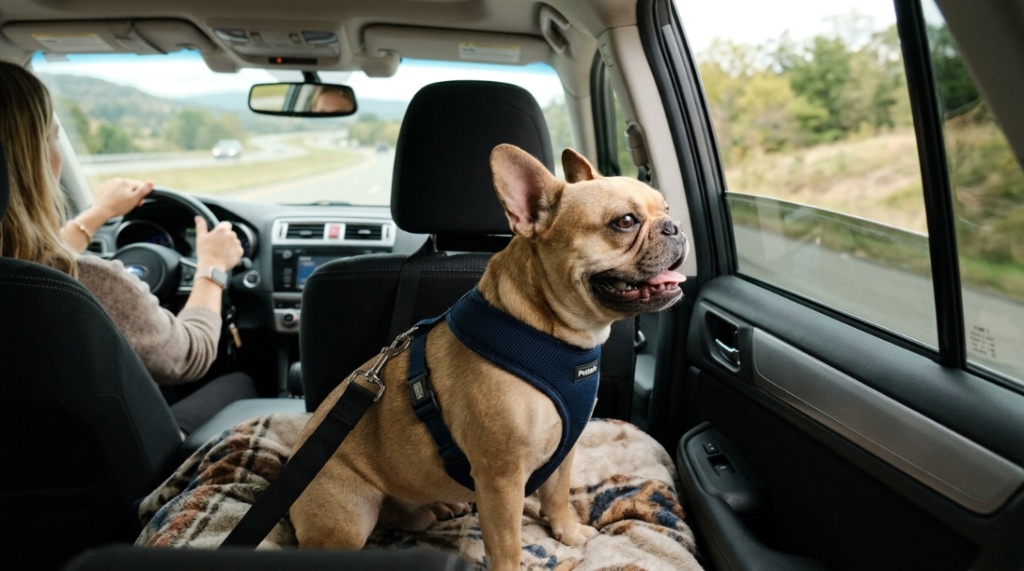
My neighbor dismissed dog seat belts as “unnecessary marketing” until his 70-pound lab launched into the dashboard during a sudden stop on the highway — no accident, just a deer that crossed three lanes ahead. The dog cracked the glove compartment cover with his skull, the dashboard deployment sensor triggered a $2,400 airbag replacement, and the vet bill for the dog’s head laceration ran $800. A $40 dog seat belt would have prevented $3,200 in damage and one terrified, bleeding dog. Pet travel safety equipment is not a luxury accessory — it is physics management. An unrestrained 60-pound dog becomes a 2,700-pound projectile at just 35 mph. That force does not distinguish between your dog, your children, or your windshield. The question is not whether dog seat belts work — the physics are irrefutable. The real question is whether the specific product you are considering delivers genuine protection or just the appearance of it. This guide provides the honest cost-benefit analysis every pet owner needs before deciding.
What Do Dog Seat Belts Actually Prevent?
Dog seat belts prevent three categories of harm: injury to the dog during sudden stops and collisions, injury to human passengers from an unrestrained dog becoming a projectile, and driver distraction from an unsecured dog moving freely through the vehicle.
Evidence-based prevention breakdown:
Category 1: Dog injury prevention
- Prevents ejection through windows (the #1 cause of fatal dog car injuries)
- Prevents impact with dashboard, windshield, or front seat backs during sudden stops
- Prevents falling into footwells where they can interfere with pedals
- Reduces injury severity by distributing impact forces across the harness rather than concentrating them on a single body point
- Prevents post-accident escape (injured dogs flee, making recovery dangerous)
Category 2: Human injury prevention
- A 60-lb dog at 35 mph impacts with 2,700 lbs of force — equivalent to a small refrigerator
- Unrestrained dogs strike rear-seat passengers, front-seat occupants, or children in car seats
- Studies show unrestrained pets increase human occupant injury severity by 20–40% in crashes
- Prevents dogs from landing on driver during impact, causing loss of vehicle control
Category 3: Distraction prevention
- Distracted driving causes 25% of all accidents
- AAA reports 65% of dog owners engage in distracting behaviors with their pets while driving
- Unrestrained dogs climb into laps, block mirrors, interfere with steering, and obscure visibility
- A secured dog eliminates these distraction vectors entirely
What Does the Research Actually Say About Dog Seat Belt Effectiveness?
Research from the Center for Pet Safety shows that properly used, crash-tested dog restraints reduce injury severity by 60–85% compared to unrestrained dogs — but also reveals that many products marketed as “seat belts” fail catastrophically during testing, providing zero protection.
Key research findings:
- Center for Pet Safety (2013 study): Tested popular dog restraints at 30 mph. Only 1 of 4 tested products adequately restrained the crash test dummy. The remaining 3 either broke, allowed excessive forward movement, or created secondary injury mechanisms.
- Subaru/CPS collaboration (2015): Expanded testing to harness systems. Products with proper materials and engineering performed well. Budget products failed consistently. Price alone did not predict performance.
- Veterinary trauma data: Dogs in crash-tested restraints during accidents show 60–85% lower injury rates than unrestrained dogs. The restraint does not eliminate injury risk but dramatically reduces severity.
- AAA Foundation (2019 survey): 84% of dog owners who traveled with their pets in cars did not use any form of restraint. Only 16% used any restraint, and of those, fewer than half used products with verified crash testing.
The research conclusion: dog seat belts work — when they are genuine safety products with proper testing, materials, and installation. Products without verified crash testing may provide false security that is worse than acknowledged non-use because owners believe they are protected when they are not.
How Much Do Quality Dog Seat Belts Cost vs. the Potential Savings?
Quality crash-tested dog seat belts cost $25–$80, while a single accident with an unrestrained dog averages $1,500–$5,000+ in combined veterinary bills, vehicle damage, insurance implications, and potential legal liability — making the investment pay for itself many times over with a single prevented incident.
Cost-benefit analysis:
| Scenario | Without Seat Belt (Costs) | With Seat Belt (Costs) | Net Savings |
|---|---|---|---|
| Hard braking, dog hits dashboard | $500–$2,000 (vet + vehicle repair) | $0 (dog restrained, no impact) | $500–$2,000 |
| Minor fender bender | $800–$3,000 (vet for soft tissue injuries) | $0–$200 (minor harness bruising if any) | $600–$2,800 |
| Moderate collision (30 mph) | $2,000–$8,000 (emergency vet, fractures, surgery) | $200–$1,000 (reduced injury severity) | $1,000–$7,000 |
| Window ejection | $3,000–$10,000+ (if dog survives) | $0 (ejection prevented entirely) | $3,000–$10,000+ |
| Dog causes accident (distraction) | $5,000–$50,000+ (liability, medical, legal) | $0 (distraction eliminated) | $5,000–$50,000+ |
The investment: $25–$80 one-time purchase, replaced every 2–3 years ($10–$30/year amortized).
The potential savings: $500–$50,000+ per prevented incident.
The math is not close.
What Are the Legitimate Downsides of Dog Seat Belts?
Legitimate downsides include: initial adjustment period for dogs unused to restraint, time investment for proper fitting and daily installation (1–3 minutes), potential for chafing with poor-fitting harnesses, limitation of dog’s preferred travel positions, and the reality that no restraint system provides 100% protection in severe accidents.
Honest disadvantages:
- Dog comfort during transition: Dogs accustomed to free movement may resist restraint initially. Some exhibit anxiety, whining, or attempts to escape. Requires 1–2 weeks of gradual conditioning.
- Daily time investment: 1–3 minutes per trip for proper harness fitting and tether connection. Adds up if you make multiple daily car trips with your dog.
- Chafing/rubbing: Poorly fitted harnesses cause skin irritation, particularly at armpits and chest. Requires proper sizing and periodic adjustment.
- Limited movement: Dogs cannot change positions as freely, cannot hang their head out windows (which is itself dangerous), and may experience motion sickness if they cannot see outside from their restrained position.
- Not 100% protective: In severe high-speed accidents, even crash-tested restraints cannot prevent all injury. They reduce severity but do not eliminate risk entirely.
- Product quality variance: The market is flooded with poorly made products. Without research, owners may buy ineffective equipment and believe they are protected.
- Vehicle compatibility issues: Some vehicles have seat belt configurations that do not work well with standard dog seat belt attachments, requiring adapters or alternative mounting solutions.
These downsides are real but manageable. None outweighs the safety benefit for regular car-traveling dogs. The conditioning period is temporary. The time investment is minimal. The product quality issue is solved with basic research before purchasing.
While securing your pup with the right travel gear keeps them safe on long road trips, everyday routines require a different kind of care. If your schedule gets hectic, hiring a professional pet sitting business is an excellent way to ensure your dog stays safe, happy, and well-exercised even when you can’t be there.
Which Dogs Benefit Most From Seat Belts?
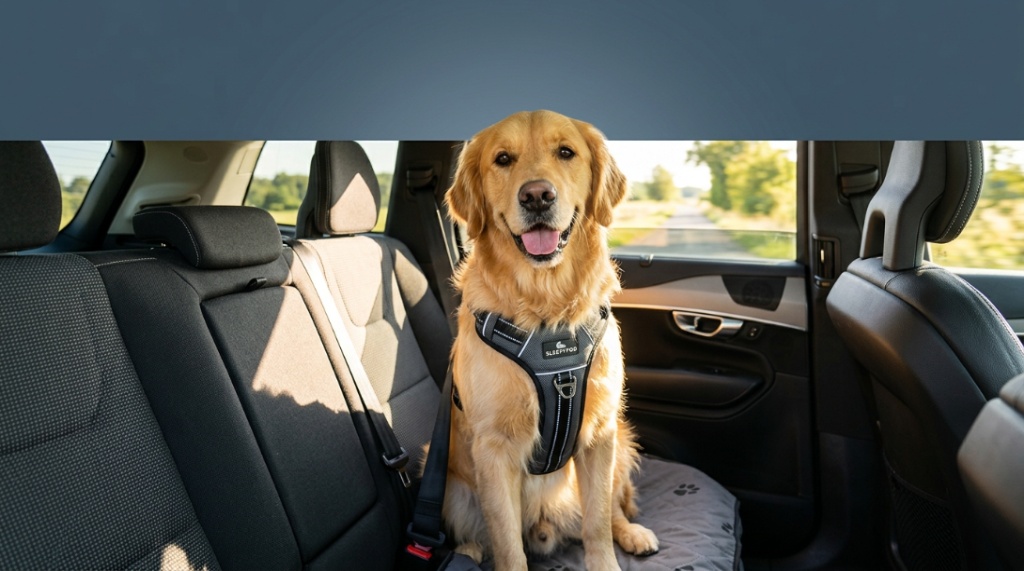
Every dog that rides in a car benefits from a seat belt, but the highest-risk dogs — large breeds (greater projectile force), anxious dogs (more likely to cause distraction), young dogs (unpredictable behavior), and frequent travelers (more exposure to accident probability) — benefit most urgently.
Priority ranking by risk level:
- Highest priority — Large/giant breeds (60+ lbs): Generate the most dangerous projectile force. A 100-lb dog at 30 mph creates 4,500 lbs of impact force. Literally life-threatening to human passengers.
- High priority — Anxious/reactive dogs: Most likely to cause driver distraction through unexpected movement, climbing, or attempts to access windows. Distraction-caused accidents affect everyone in the vehicle.
- High priority — Puppies and young dogs: Unpredictable, curious, and lack learned car behavior. Most likely to jump, climb, or interfere with driving without warning.
- Moderate priority — Frequent travelers: Simple probability — more car time = more exposure to potential accidents. Daily commuters face higher cumulative risk than occasional travelers.
- Moderate priority — Multi-dog households: Multiple unrestrained dogs interact unpredictably, increasing distraction risk and complicating post-accident recovery.
- Standard priority — All other dogs: Every car ride carries accident risk regardless of dog size, temperament, or frequency. Baseline protection applies universally.
What Should You Look for When Buying Your First Dog Seat Belt?
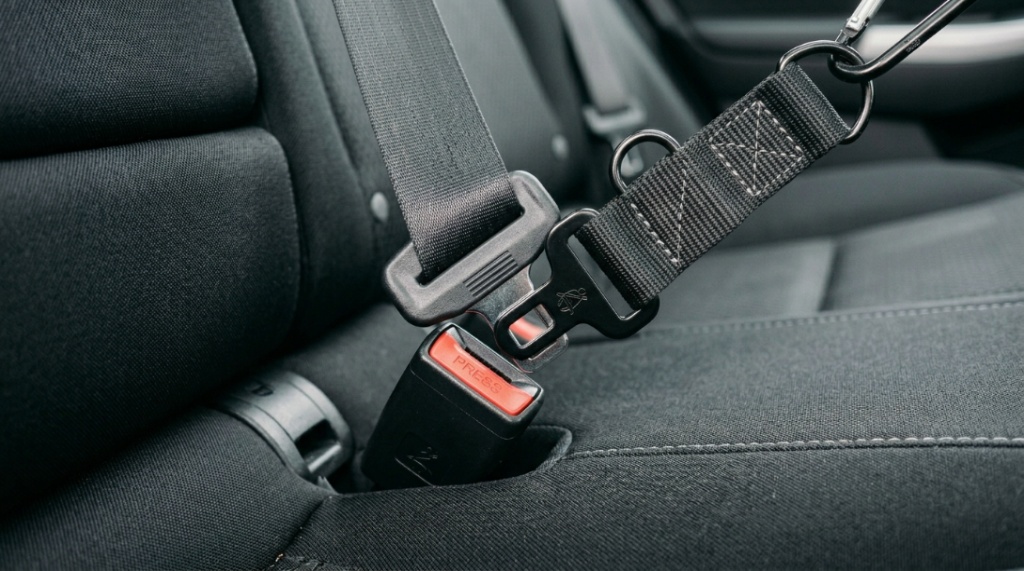
First-time buyers should prioritize: crash-test certification or documented testing, compatibility with a separate crash-rated harness, adjustable tether length, metal hardware throughout, and a return policy that allows real-world testing — in that exact priority order.
First purchase checklist:
- Crash testing verification: Does the manufacturer provide specific test data, certification, or testing laboratory name? If yes, proceed. If no, consider alternatives.
- Harness compatibility: Does the system work with a separately purchased crash-tested harness, or is it an all-in-one system? Separate harness + tether often provides better safety because you can choose each component for quality.
- Adjustable length: Can you set the tether to your specific dog’s size and your vehicle’s dimensions? Fixed-length products rarely work optimally.
- Metal hardware: Are ALL buckles, carabiners, and adjusters metal? Any plastic component is a potential failure point under crash forces.
- Return/trial policy: Can you test the product with your dog and vehicle and return if incompatible? Proper fitting requires real-world testing that store visits cannot replicate.
- Price range: $25–$80 for the tether system, $30–$60 for a quality travel harness. Total investment: $55–$140 for complete setup.
For comprehensive, tested recommendations across different dog sizes and vehicle types, the best dog seat belts reviewed for all vehicle types provides detailed testing results and value analysis — helping first-time buyers choose products with verified protection rather than marketing-only claims.
Conclusion
Dog seat belts are unequivocally worth it based on every metric: physics, research, cost-benefit analysis, and real-world incident data. A $40–$80 investment prevents $500–$50,000+ in potential damage while reducing your dog’s injury risk by 60–85% during the inevitable hard brakes, minor fender benders, and unexpected road events that every regular driver encounters. The downsides — conditioning time, daily installation minutes, and product research — are trivially small compared to the consequences of a single unrestrained incident.
The only scenario where a dog seat belt is not worth it: if your dog never rides in a car. For everyone else — from daily commuters to weekend adventurers — the question is not whether to buy one, but which one provides genuine crash-tested protection rather than false security. Spend 20 minutes researching, invest $50–$100 in quality equipment, dedicate one week to conditioning your dog, and never again wonder whether your pet is safe during the drives you take together.
Did a specific incident convince you to buy a dog seat belt — or are you still on the fence? Share your story below and help other pet owners make an informed decision.
Frequently Asked Questions
Do veterinarians recommend dog seat belts?
Yes — the American Veterinary Medical Association (AVMA) recommends restraining dogs during car travel. Most veterinarians who treat trauma cases advocate strongly for proper restraint after seeing the injuries unrestrained dogs sustain. Ask your vet about their recommendation — the vast majority will confirm that proper restraint prevents injuries they see regularly in practice.
Can a dog seat belt save my dog’s life in a serious accident?
In moderate accidents (under 40 mph), crash-tested dog seat belts significantly reduce fatal injury risk by preventing ejection and reducing impact force through distribution. In severe high-speed accidents, they reduce injury severity but cannot guarantee survival — similar to how human seat belts dramatically improve but cannot guarantee outcomes in every scenario. Prevention of ejection alone saves many lives.
Are dog seat belts required by law?
Requirements vary by jurisdiction. Some states (New Jersey, Hawaii, Connecticut, Maine) have specific pet restraint laws or distracted driving statutes that apply to unrestrained pets. Many other states can cite drivers if unrestrained pets contribute to accidents. Beyond legal requirements, insurance implications exist — companies may reduce claims if unrestrained pets contributed to the incident.
How long does it take for a dog to get used to a seat belt?
Most dogs adapt within 5–10 car rides when introduced gradually with positive reinforcement (treats, praise). Some dogs accept restraint immediately; others require 2–3 weeks of conditioning. Start with short trips and build duration. Dogs who associate the harness with positive experiences (car rides they enjoy) adapt fastest. Forcing compliance without conditioning creates lasting anxiety.
Do dog seat belts work for small dogs under 10 pounds?
Yes, though very small dogs (under 10 lbs) often benefit more from a crash-tested carrier secured with the vehicle seat belt than from a harness-and-tether system. The tether mechanism works for small dogs but finding properly fitting miniature harnesses with adequate crash ratings can be challenging. Carrier systems provide an enclosed protective space that accounts for small dogs’ vulnerability to impact forces.
What happens if I get in an accident and my dog is not restrained?
An unrestrained dog becomes a projectile that can injure or kill human passengers, sustain severe injuries themselves (fractures, internal bleeding, head trauma), escape through broken windows into traffic, or interfere with emergency responders trying to access the vehicle. Insurance may reduce your claim, and you may face legal liability if your unrestrained dog injures another person during the accident.
Can I use a dog seat belt with a dog car seat or booster?
Yes — many dog car seats and boosters are designed to work with seat belt tethers for dual security. The booster elevates small dogs to window height (reducing motion sickness), while the tether attached to the harness prevents ejection from the booster during sudden stops. Verify the booster itself is secured to the vehicle seat belt independently of your dog’s tether for complete protection.