
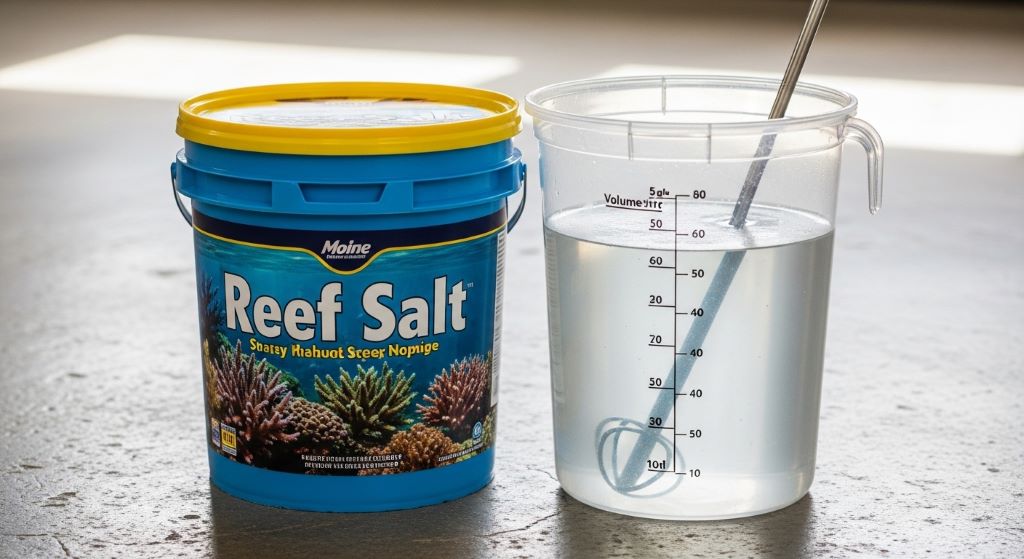
Selecting the right salt mix for your reef aquarium is one of the most important decisions you’ll make as a marine hobbyist. Your corals, fish, and invertebrates depend on properly balanced seawater to survive and thrive. Unlike freshwater aquariums, reef tanks require specific mineral ratios and trace elements that only quality salt mixes can provide.
The market offers dozens of salt brands, each claiming to be the best for reef keeping. Some formulas target specific coral types, while others aim for general-purpose use. Understanding what separates premium salts from budget options helps you make informed choices that benefit your livestock without wasting money on unnecessary features.
This comprehensive guide will help you navigate the world of reef aquarium salts. You’ll learn what parameters matter most, how different formulas affect your tank, and which features justify higher prices. By the end, you’ll know exactly how to choose a salt mix that supports your reef’s success.
Understanding Reef Salt Composition
Artificial seawater contains far more than just sodium and chloride. A complete salt mix includes major ions like calcium, magnesium, and carbonates, plus dozens of trace elements. Each component plays a specific role in supporting marine life.
Natural seawater maintains remarkably consistent chemistry across the world’s oceans. Reef salt manufacturers attempt to replicate this consistency in their formulas. The best products dissolve completely, leaving no residue, and produce water chemistry that closely matches natural reef environments.
Additionally, salt mixes differ in their target alkalinity and calcium levels. Some brands formulate their products for higher parameters to support demanding SPS corals. Others maintain more conservative levels suitable for mixed reef systems. Understanding these differences helps you match the salt to your specific corals.
Major Parameters in Quality Salt Mixes
Several key parameters determine whether a salt mix will support healthy coral growth and vibrant colors. Testing your newly mixed saltwater reveals how well a particular brand meets your needs.
Alkalinity measures buffering capacity and typically ranges from 7 to 12 dKH in reef salts. Higher alkalinity supports faster coral growth but requires more frequent testing and adjustment. Lower alkalinity provides more stability but may limit growth in demanding systems.
Calcium concentration should fall between 380 and 450 ppm in most reef salts. Corals constantly consume calcium to build their skeletons. Therefore, starting with adequate calcium levels reduces the need for immediate supplementation.
Magnesium works as a helper element, typically present at 1250 to 1350 ppm. Proper magnesium levels prevent calcium and alkalinity from precipitating out of solution. Low magnesium causes unexplained drops in other parameters, making it crucial for stability.
The calcium to alkalinity ratio affects how well corals can utilize these elements. A balanced ratio allows efficient calcification without forcing you to constantly chase one parameter or the other. Look for salts that maintain ratios appropriate for your coral selection.
Specific gravity indicates salt concentration and should read 1.025 to 1.026 for reef aquariums. Consistent salinity prevents stress on livestock and ensures proper functioning of equipment like protein skimmers.
Trace Elements and Their Importance
Beyond major parameters, trace elements support various biological processes in your reef ecosystem. Quality salt mixes include these micronutrients in appropriate concentrations.
Strontium aids coral skeleton formation and enhances growth rates. While needed in small amounts, its presence in salt mix reduces the need for separate supplementation in many tanks.
Iodine supports coral coloration and various metabolic functions. Many hobbyists supplement iodine separately, but having it in your base salt mix provides a foundation that prevents deficiencies between doses.
Iron, manganese, and other metals are required in trace amounts for photosynthesis and color production. Too little limits coral health, while too much can fuel algae growth. Quality salts balance these elements carefully.
However, not all trace elements are beneficial. Some salt mixes may contain contaminants or unwanted compounds. Reading analysis sheets from manufacturers helps you understand exactly what’s in your salt.
Price varies dramatically among reef salts, from budget blends to premium formulations. Understanding what justifies the cost difference helps you decide where to invest your money.
Budget salts typically mix to acceptable parameters and support basic reef keeping. They work well for fish-only systems or beginner reef tanks with hardy corals. The main trade-off is usually less consistency batch-to-batch and fewer trace elements.
Mid-range options offer better quality control and more complete trace element packages. These salts suit most reef aquariums and provide good value for hobbyists keeping a variety of coral types. Consistency improves, and parameter stability becomes more predictable.
Premium salts feature pharmaceutical-grade ingredients, extensive quality testing, and optimized formulations for specific applications. Advanced reef keepers with demanding SPS corals often prefer these products despite their higher cost. The consistency and completeness justify the expense when maintaining high-end systems.
Additionally, consider mixing volume and storage space. Larger buckets offer better value but require proper storage. Buying more than you can use before the salt absorbs moisture wastes money regardless of the per-gallon cost.
Dissolution and Mixing Characteristics
How salt dissolves and mixes affects both convenience and water quality. Some formulas create challenges that make water changes more difficult than necessary.
Dissolution time varies significantly between brands. Fast-dissolving salts let you mix water quickly, which is convenient for emergency water changes. Slower formulas may require overnight mixing for complete dissolution and stabilization.
Precipitation occurs when some salts leave white residue in mixing containers or form cloudy water. This happens when certain compounds don’t fully dissolve or when mixing temperature is too low. Quality salts minimize precipitation through better formulation.
Temperature affects how well salt dissolves and what parameters result. Most manufacturers recommend mixing at 75-80 degrees Fahrenheit. Mixing at different temperatures can alter alkalinity readings and slow dissolution significantly.
Additionally, always mix salt in clean containers with good circulation. Using powerheads or pumps ensures complete mixing and prevents settled material at the bottom. Never add salt directly to your aquarium, as concentrated saltwater harms livestock.

Matching Salt to Your Coral Types
Different corals have varying nutritional and chemical requirements. Choosing salt formulated for your specific coral collection optimizes growth and coloration as part of good home aquarium care practices.
SPS corals demand higher calcium and alkalinity for their rapid skeletal growth. Salts formulated for SPS typically mix to the higher end of acceptable ranges. This reduces the amount of supplementation needed between water changes.
LPS corals generally tolerate a wider range of parameters but benefit from stable conditions. Most general-purpose reef salts work well for LPS-dominant tanks. The focus should be on consistency rather than maximum parameter levels.
Soft corals are the most forgiving regarding water chemistry. Budget to mid-range salts usually provide everything soft corals need. However, trace elements still matter for optimal coloration and polyp extension.
Mixed reef aquariums containing all three coral types benefit from moderate parameter levels that don’t favor one group over others. General-purpose reef salts designed for mixed systems offer the best balance.
Storage and Shelf Life Considerations
Proper storage extends salt longevity and maintains its quality. Mishandled salt develops problems that affect your aquarium water chemistry.
Moisture is salt’s biggest enemy during storage. Salt mix readily absorbs humidity from the air, causing clumping and potentially altering its chemical composition. Therefore, always seal containers tightly after each use.
Store salt in cool, dry locations away from moisture sources. Garages and basements may seem convenient but often have humidity issues. Climate-controlled storage areas preserve salt quality much better.
Clumped salt often indicates moisture absorption. While you can still use lightly clumped salt, heavily caked material may have altered chemistry. Breaking up clumps doesn’t restore original quality if significant moisture has been absorbed.
Additionally, check expiration dates when buying salt. While dry salt doesn’t truly expire, trace elements may degrade over extended periods. Using fresh salt ensures you get the full benefit of included additives.
Reading and Understanding Salt Analysis
Reputable manufacturers provide detailed analysis of their products. Learning to read these reports helps you verify that a salt meets your needs.
Look for guaranteed analysis showing major and minor elements. This transparency indicates manufacturer confidence in their product. Brands that hide their analysis should raise concerns about consistency or quality.
Batch consistency matters as much as target parameters. Some manufacturers test each batch and publish results online. This level of quality control ensures you get predictable results every time you mix water.
Compare analysis to natural seawater values. While perfect matching isn’t necessary, gross deviations suggest formulation issues. Parameters should fall within ranges that marine organisms evolved to tolerate.
However, remember that analysis represents averages. Individual buckets may vary slightly from published values. Testing your newly mixed water confirms what you’re actually adding to your aquarium.
Cost-Effectiveness and Usage Rates
Calculating actual cost per gallon of mixed water reveals which salts provide the best value. Sometimes cheaper brands cost more in the long run.
Water change frequency affects how quickly you consume salt. Tanks requiring weekly 20-percent changes use significantly more salt than those needing monthly 10-percent changes. Match your purchase quantity to your consumption rate.
Additionally, factor in supplementation costs. Salts with lower parameters require more additives to maintain proper levels. While the base salt may cost less, added supplementation expenses can exceed the savings.
Consider your aquarium size when buying salt. Small tanks under 50 gallons can use smaller containers, while large systems benefit from bulk purchasing. Calculate based on your specific needs rather than assuming bigger buckets always save money.
Common Mistakes When Choosing Salt
Avoiding common errors saves money and prevents problems with your reef ecosystem. Many hobbyists make these mistakes when selecting or using salt mixes.
Changing salt brands frequently prevents you from establishing baseline parameters. Stick with one quality brand long enough to understand how it behaves in your system. Frequent switching creates unnecessary instability.
Mixing salt at incorrect temperatures leads to inaccurate parameters and poor dissolution. Always match manufacturer recommendations for mixing temperature. Cold water especially causes issues with alkalinity readings.
Adding unmixed salt directly to aquariums causes severe chemical burns to corals and fish. The concentrated solution creates toxic conditions in the immediate area. Always mix salt completely in a separate container.
Additionally, using expired or moisture-damaged salt risks introducing contaminants or imbalanced chemistry. When in doubt about salt condition, replace it rather than risking your livestock.
Testing Your Mixed Saltwater
Never assume your salt mixes to stated parameters. Testing newly prepared water confirms you’re adding what you expect to your aquarium.
Test alkalinity, calcium, and magnesium in each batch of new saltwater. Comparing these results to your tank parameters helps you anticipate how water changes will affect chemistry. Significant differences require adjustments before adding water.
Check salinity with a refractometer rather than a hydrometer. Refractometers provide more accurate readings and help ensure consistency. Calibrate your refractometer regularly with calibration solution.
Additionally, test pH and temperature before adding new water to your aquarium. Large differences between new water and tank water stress livestock. Matching temperature and chemistry minimizes this stress.
Transitioning Between Salt Brands
Sometimes you need to switch salt brands due to availability, formula changes, or performance issues. Proper transitioning prevents problems with good salt mix tips application.
Research your new salt’s parameters before buying. Choose a replacement with similar chemistry to minimize impact on your system. Drastic parameter changes require careful acclimation even when just switching salts.
Transition gradually by mixing old and new salts together for several water changes. Start with 75 percent old salt and 25 percent new, then shift to 50-50, then 25-75 before going completely to the new brand.
Monitor parameters closely during the transition period. Watch for unexpected changes and be prepared to adjust dosing if needed. Some shifts in chemistry are normal as you adapt to the new formula.
Conclusion
Choosing the right reef salt for your home aquarium care routine requires balancing quality, consistency, and budget. The best salt for your system matches your coral types, dissolves cleanly, and produces predictable parameters batch after batch.
Focus on salts from reputable manufacturers that provide detailed analysis and quality control. Whether you choose budget, mid-range, or premium options, consistency matters more than hitting perfect numbers. Your corals adapt to stable conditions better than they chase ideal parameters.
Remember that salt is just one part of successful reef keeping. Combining quality salt with proper mixing techniques, regular testing, and appropriate storage creates a foundation for thriving corals. Test your newly mixed water, maintain proper parameters, and make water changes part of your regular maintenance routine.
The investment in quality salt pays dividends through healthier livestock and more stable water chemistry. Your reef will reward you with vibrant colors and steady growth when you provide the consistent, balanced seawater that quality salt mixes deliver.
Frequently Asked Questions
Can I use aquarium salt instead of reef salt for marine tanks?
No, regular aquarium salt contains only sodium chloride and lacks the calcium, magnesium, and trace elements that marine organisms need. Reef salt is specifically formulated to replicate natural seawater chemistry. Using aquarium salt in reef tanks will quickly lead to deficiencies and livestock health problems. Always use proper marine or reef salt mixes for saltwater aquariums.
How long can I store mixed saltwater before using it?
Properly stored mixed saltwater remains usable for several weeks. Keep it in a sealed container with gentle circulation to prevent stagnation. Avoid storing in clear containers exposed to light, which can fuel algae growth. Test parameters before use, as some values may shift during storage. Most hobbyists mix water within a few days of use for best results.
Does expensive salt really make a difference for my reef?
The difference depends on your coral types and system demands. Premium salts offer better consistency, purer ingredients, and more complete trace element packages. For advanced SPS systems, this can make a noticeable difference in growth and coloration. However, mid-range salts work perfectly well for most mixed reef systems. Choose based on your specific needs rather than assuming expensive always means better.
Why does my salt mix cloudy even after mixing overnight?
Cloudiness usually results from precipitation of certain minerals, often due to cold mixing water or poor-quality salt. Ensure your mixing water is at least 75 degrees Fahrenheit. Some salts naturally take longer to clear. If cloudiness persists beyond 24 hours with proper temperature and circulation, consider switching brands. The precipitated minerals may not be available to your corals.
Should I adjust newly mixed saltwater parameters before adding to my tank?
Generally, use salt as mixed without adjustment. If your salt consistently mixes too high or low in certain parameters, switch brands rather than constantly adjusting. However, matching salinity and temperature to your tank before water changes is essential. Some hobbyists adjust alkalinity when their salt mixes significantly different from their tank, but this should be the exception rather than routine practice.
Related Topics:
What is the difference between the flame spray and plasma spray processes?
How to choose someone to act as your attorney under an LPA