
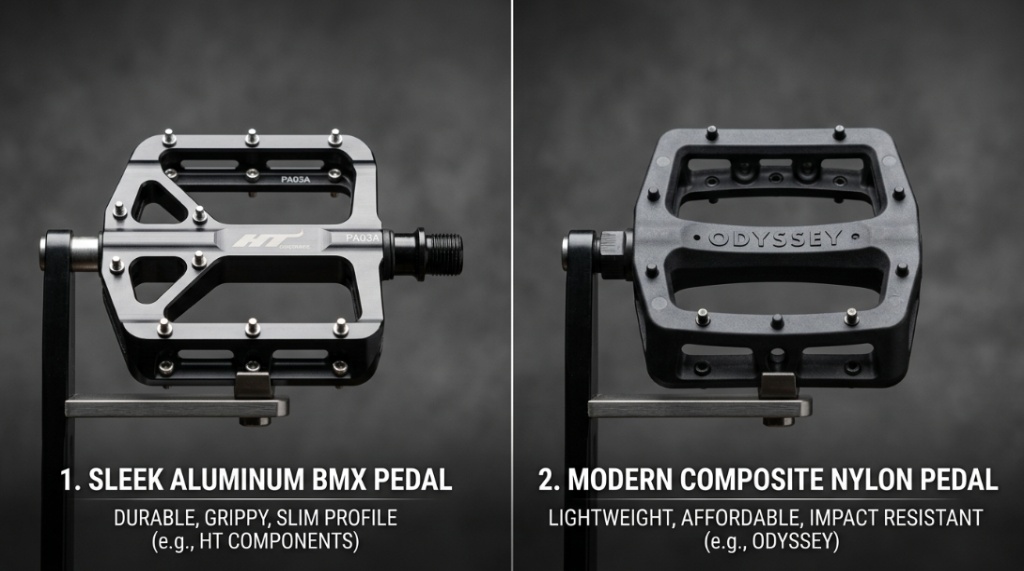
What Are the Key Differences Between Nylon and Aluminum BMX Pedals?
Here’s a detailed BMX pedal comparison:
| Feature | Nylon BMX Pedals | Aluminum BMX Pedals |
|---|---|---|
| Material | Composite nylon (often with fiberglass or carbon fiber reinforcement) | Aluminum alloy (e.g., 6061 or 7075) |
| Weight | Lightweight (typically 200–300g per pair) | Heavier (typically 300–500g per pair) |
| Durability | Good for casual riding; may wear out faster with heavy use | Highly durable; resistant to impacts and wear |
| Grip | Often features molded pins or textured surfaces for traction | Usually has replaceable pins for customizable grip |
| Cost | Budget-friendly ($20–$50) | More expensive ($50–$150) |
| Best For | Beginners, casual riders, park/street riding | Advanced riders, dirt/vert riding, heavy tricks |
What Are the Pros and Cons of Nylon BMX Pedals?
Nylon BMX pedals are a popular choice for many riders:
| Pros | Cons |
|---|---|
|
|
What Are the Pros and Cons of Aluminum BMX Pedals?

Aluminum BMX pedals are favored by serious riders:
| Pros | Cons |
|---|---|
|
|
Which Material Is Best for Your Riding Style?
Choose based on how and where you ride:
| Riding Style | Recommended Pedal Material | Why? |
|---|---|---|
| Beginner/Casual | Nylon | Lightweight, affordable, and low-maintenance for learning and casual riding. |
| Park/Street | Nylon or Aluminum | Nylon for weight savings; aluminum for durability during tricks. |
| Dirt/Vert | Aluminum | Durable and strong for heavy impacts and rough landings. |
| Freestyle/Technical | Aluminum | Customizable grip and durability for advanced tricks. |
| Commuting | Nylon | Lightweight and comfortable for everyday use. |
What Are the Best Nylon BMX Pedals?
Here are some of the best nylon BMX pedals for different budgets and needs:
| Model | Brand | Key Features | Price Range |
|---|---|---|---|
| PC Pedals | Plastic Composite | Lightweight, durable, molded pins | $20–$30 |
| Odyssey Twisted PC Pedals | Odyssey | Classic design, large platform, 9/16″ spindle | $25–$40 |
| Eclat Slash Pedals | Eclat | Slim profile, strong composite, replaceable pins | $30–$50 |
| Cult Dak Pedals | Cult | Wide platform, durable nylon, great grip | $35–$50 |
Choosing between nylon and aluminum BMX pedals depends on your riding style, budget, and priorities. Nylon pedals are lightweight and affordable, making them ideal for beginners and casual riders. Aluminum pedals, on the other hand, offer durability and customizable grip, perfect for advanced riders and heavy tricks.