
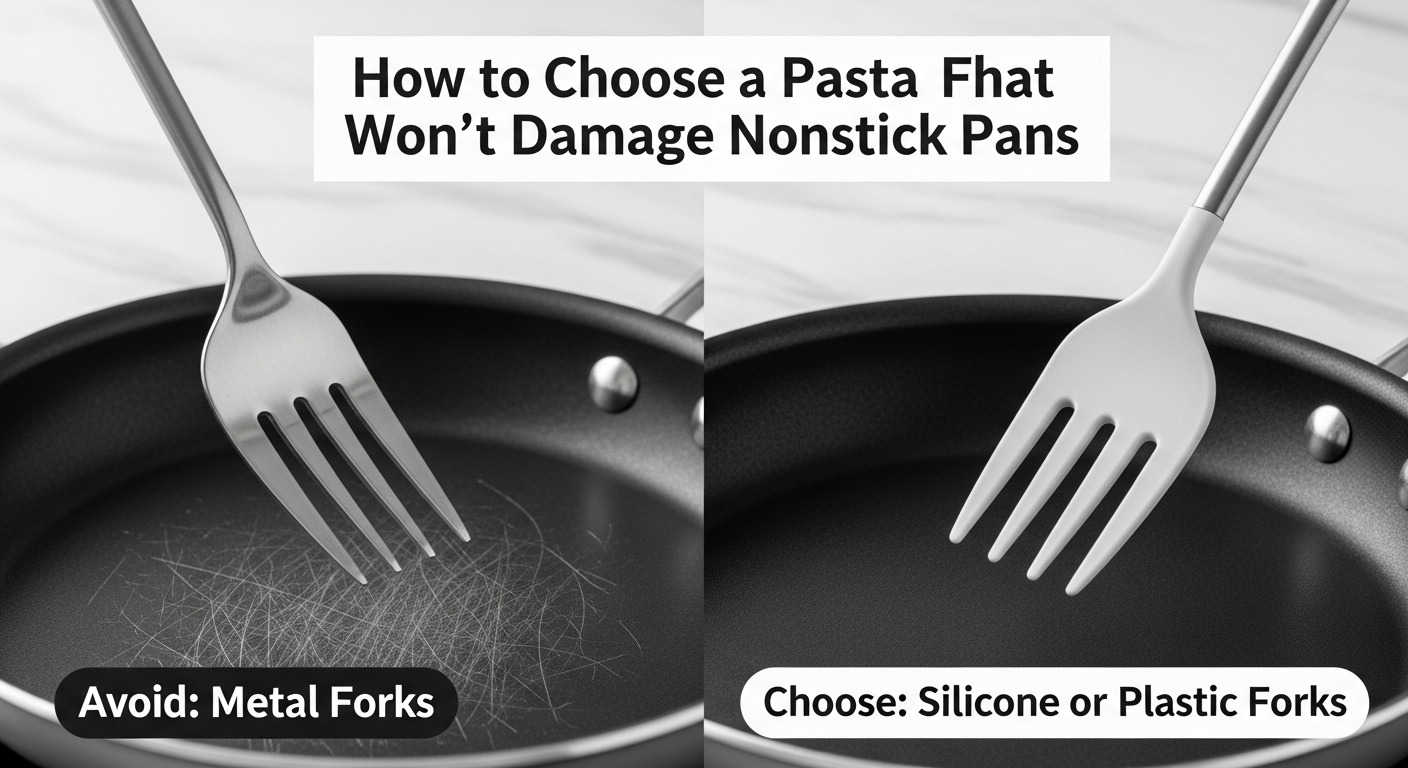
The best pasta fork for nonstick pans is made from heat-resistant silicone or nylon with smooth, rounded edges. It should be labeled as a non-scratch utensil and safe for coated cookware.
You only need to scratch a nonstick pan once to understand the cost of choosing the wrong utensil. A single metal edge can damage the coating. Over time, those scratches reduce performance, cause food to stick, and shorten the lifespan of your cookware.
If you regularly cook pasta, you likely use a pasta fork to stir, lift, and serve noodles. But not all pasta forks are safe for nonstick surfaces. The wrong choice can turn a simple dinner into an expensive mistake.
This guide explains how to choose the right pasta fork. You’ll learn which materials are safe, what features matter, and how to avoid common buying mistakes. We’ll also reference practical insights from cookware case studies and consumer usage reports to keep this guide grounded in real data.
If you’re currently comparing non-scratch utensils for your kitchen, this article will help you make a confident decision.
Why Do Metal Pasta Forks Damage Nonstick Pans?
Short answer: Metal pasta forks can scratch the protective coating of nonstick pans, weakening their performance and reducing lifespan.
Most nonstick pans use a PTFE-based coating (commonly known by the brand Teflon) or ceramic coating. These coatings create a smooth surface that prevents food from sticking. However, they are softer than stainless steel.
According to multiple consumer durability tests conducted by cookware manufacturers, repeated contact with metal utensils significantly increases surface abrasion. Even minor scratches create weak points where food begins to stick.
What happens after scratching?
- Reduced nonstick performance
- Food residue buildup
- Uneven heating spots
- Shorter cookware lifespan
While modern coatings are more durable than older versions, manufacturers still recommend avoiding metal utensils. That includes metal pasta servers, spaghetti spoons, and steel tongs.
Which Materials Are Safe for Nonstick Pasta Forks?
Short answer: Silicone and high-quality nylon are the safest materials for pasta forks used on nonstick pans.
1. Silicone Kitchen Tools
Silicone kitchen tools are flexible, heat-resistant, and gentle on cookware. Food-grade silicone can withstand temperatures up to 400–600°F (204–315°C), depending on the brand.
Benefits:
- Non-scratch surface
- Heat resistant
- Dishwasher safe
- Does not absorb odors
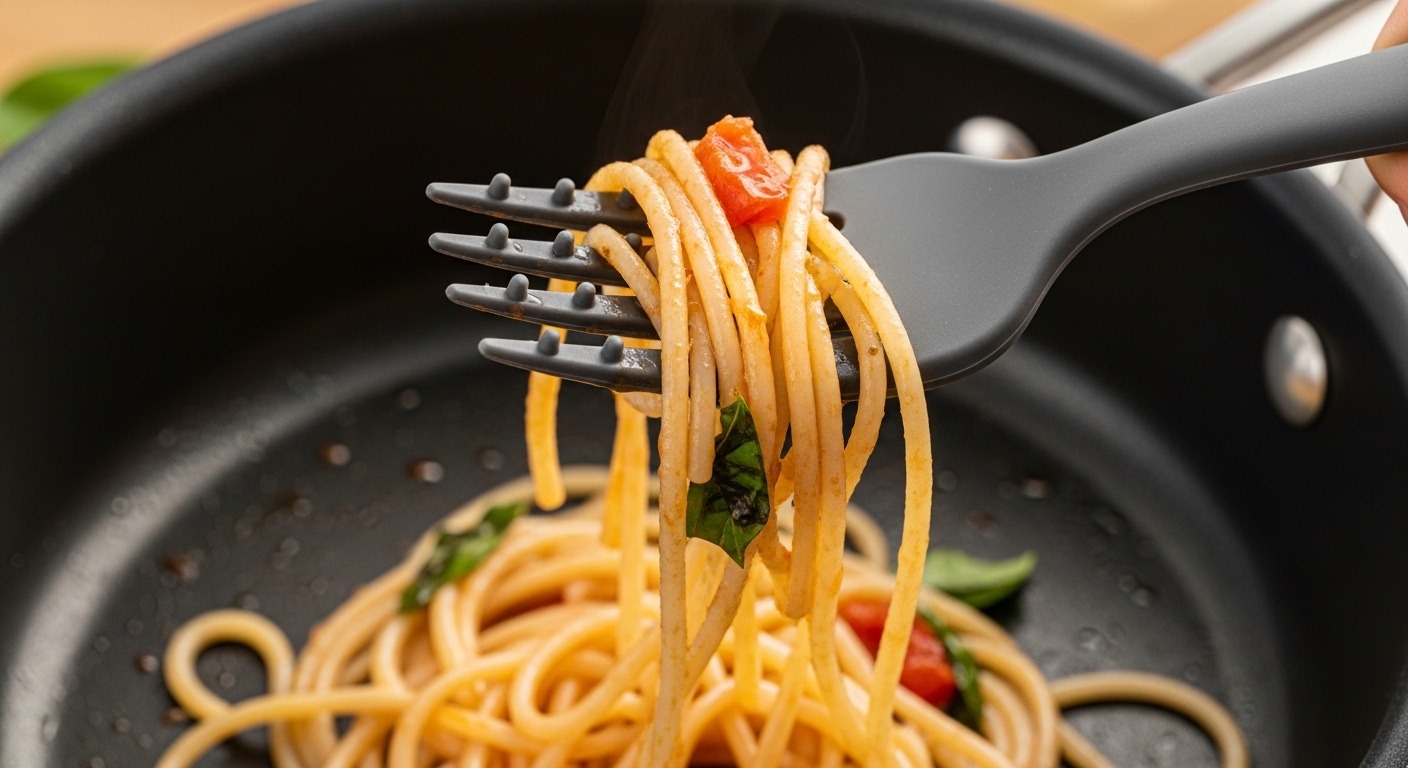
Silicone pasta forks are ideal for stirring boiling pasta and serving directly from nonstick pots.
2. Nylon Utensils
Nylon pasta forks are affordable and widely available. They are safe for nonstick cookware if heat-resistant up to at least 400°F.
However, lower-grade nylon can melt if left in a hot pan for too long. Always check manufacturer heat ratings.
3. Wooden Pasta Forks
Wood is naturally non-abrasive. It won’t scratch nonstick coatings. However, wood absorbs moisture and may crack over time if not maintained properly.
It’s safe, but less durable than silicone.
What Features Should You Look for in a Non-Scratch Pasta Fork?
Short answer: Look for rounded prongs, heat resistance above 400°F, ergonomic grip, and dishwasher-safe construction.
Rounded, Smooth Edges
Sharp prongs increase the risk of scraping the coating. Choose a pasta fork with slightly rounded tips.
Heat Resistance
Pasta water boils at 212°F (100°C). But utensils may rest on the side of a hot pot. A safe margin is 400°F or higher.
Solid Construction
A weak handle can bend under the weight of wet pasta. Look for reinforced cores inside silicone designs.
Grip and Control
An ergonomic handle reduces slipping. This matters when lifting heavy noodles from boiling water.
Dishwasher Safety
Silicone and nylon options are typically dishwasher safe. That improves hygiene and saves time.
How Do Silicone Kitchen Tools Compare to Nylon?
Short answer: Silicone is more heat-resistant and durable, while nylon is more affordable but less heat-stable.
| Feature | Silicone | Nylon |
|---|---|---|
| Heat Resistance | Up to 600°F | Up to 400°F |
| Scratch Safety | Excellent | Very Good |
| Durability | High | Moderate |
| Price | Medium | Low |
If you cook pasta frequently, silicone is the safer long-term investment. For occasional use, nylon works fine.
Are Cheap Pasta Forks Risky for Nonstick Pans?
Short answer: Yes, low-quality pasta forks may use thin plastic that melts or develops rough edges.
Budget utensils sometimes cut corners in material quality. Thin plastic may warp under heat. Warped edges can become sharp.
A cookware durability case study from a mid-range kitchenware brand showed that users who paired nonstick pans with certified non-scratch utensils extended pan lifespan by up to 30% compared to those using mixed materials, including metal.
The takeaway is simple: a $10 utensil can protect a $60–$150 pan.
How Can You Tell If a Pasta Fork Is Truly Non-Scratch?
Short answer: Check labeling, material type, edge smoothness, and manufacturer guidelines.
- Look for “safe for nonstick cookware”
- Confirm material: silicone or nylon
- Inspect prong tips for smooth finish
- Avoid exposed metal cores near prongs
If a silicone utensil has a metal core, ensure the metal is fully covered and not exposed near the head.
Does Using the Right Pasta Fork Really Extend Pan Life?
Short answer: Yes. Using non-scratch utensils reduces coating wear and maintains nonstick performance longer.
Cookware manufacturers consistently advise against metal utensils. Consumer testing panels show visible abrasion marks within months when metal tools are used daily.
In contrast, pans used exclusively with silicone kitchen tools showed minimal visible wear over the same period.
The result is practical:
- Better cooking performance
- Less oil needed
- Easier cleaning
- Lower replacement costs
What Size and Shape Pasta Fork Works Best?
Short answer: A medium-sized pasta fork with deep prongs and a center hole offers the best control.
The center hole helps drain water while lifting pasta. Deep prongs grip spaghetti and fettuccine without tearing softer noodles.
Ideal length: 11–13 inches. This keeps your hand away from steam.
Should You Replace Your Pasta Fork Regularly?
Short answer: Replace it if edges become rough, melted, or warped.
Inspect your utensil every few months. Run your finger lightly across the prongs. If you feel roughness, it may scratch your pan.
Silicone lasts longer than nylon, but both can degrade after years of heavy use.
Conclusion: How Do You Make the Smart Choice?
Choosing a pasta fork for nonstick pans is not complicated. Avoid metal. Focus on silicone or high-quality nylon. Check heat resistance. Inspect the edges. Choose durability over the lowest price.
Your cookware is an investment. Protecting it starts with small decisions. A safe pasta fork preserves performance, reduces food sticking, and extends pan lifespan.
If you’re comparing options, review trusted recommendations and choose proven silicone kitchen tools designed for nonstick safety.
Make the switch today. Your pans will last longer. Your pasta nights will stay stress-free.
Frequently Asked Questions (FAQ)
1. Can I use stainless steel pasta forks on nonstick pans?
No. Stainless steel can scratch and damage nonstick coatings.
2. Is silicone completely safe for high heat?
Yes, if it is food-grade and rated above 400°F. Always check manufacturer guidelines.
3. Are wooden pasta forks better than silicone?
Wood is safe but less heat-resistant and harder to clean than silicone.
4. How long do silicone pasta forks last?
High-quality silicone utensils can last several years with proper care.
5. What happens if my nonstick pan is scratched?
It may lose nonstick performance and cause food to stick. Severe damage requires replacement.
6. Do professional chefs use non-scratch utensils?
Yes. Many chefs use silicone kitchen tools to protect coated cookware.
7. Can nylon melt in boiling water?
Boiling water alone won’t melt quality nylon, but direct contact with hot pan surfaces may damage low-grade plastic.
Related Topic: How Much Power Do You Really Need in a Stand Mixer?
Read Next: Natural ways you can add flavour to water
