

Choosing a stand mixer can feel overwhelming with so many options on the market. One of the most confusing aspects is understanding wattage and power ratings. Does higher wattage always mean better performance? This guide will help you understand what power levels actually matter for your baking needs and budget.
Understanding Stand Mixer Power Ratings
Wattage tells you how much electricity a mixer consumes, but it doesn’t tell the whole story. Two mixers with identical wattage can perform very differently based on their motor design and gear system. Therefore, you need to look beyond the numbers on the box.
Motor efficiency plays a crucial role in actual performance. A well-designed 500-watt motor can sometimes outperform a poorly designed 700-watt motor. However, wattage still provides a helpful starting point for comparison.
Most home bakers find that mixers between 250 and 600 watts handle typical tasks effectively. These include whipping cream, mixing cookie dough, and preparing cake batters. Additionally, this range offers good value without unnecessary power that drives up costs.
Power Requirements for Different Baking Tasks
Different recipes demand different levels of mixing power. Light tasks like beating eggs or whipping cream require minimal effort from your mixer. Conversely, thick bread dough can strain underpowered machines.
Light Mixing Tasks
Whipping egg whites, preparing meringues, and making whipped cream are relatively easy tasks. Mixers with 250 to 350 watts handle these jobs without breaking a sweat. Even budget-friendly models perform well for occasional bakers who focus on lighter recipes.
Medium Mixing Tasks
Cookie dough, cake batters, and muffin mixes fall into this category. These tasks require moderate power to blend ingredients smoothly. Mixers in the 350 to 500-watt range work perfectly for regular home baking. Furthermore, they provide enough strength for weekly baking sessions.
Heavy Mixing Tasks
Bread dough, especially whole wheat and artisan varieties, demands serious power. Dense mixtures can bog down weaker motors and cause them to overheat. This is where higher wattage becomes important for consistent results.
A 1000 watt mixer can tackle even the stiffest doughs without slowing down. These powerful machines maintain consistent speed under load, which produces better texture in your final products. Moreover, they can handle double batches without strain.
When Higher Power Makes Sense
Not everyone needs maximum power in their kitchen. However, certain situations definitely benefit from investing in stronger motors. Understanding your baking habits helps determine if extra power justifies the additional cost.
Frequent Bread Baking
If you bake bread weekly or make multiple loaves at once, power matters significantly. Kneading dough for ten minutes can overheat underpowered mixers. Therefore, serious bread bakers should consider machines rated above 600 watts.
Professional bakers and serious hobbyists often choose a heavy duty mixer for reliability. These machines handle continuous use without overheating or wearing down quickly. Additionally, they maintain consistent performance over many years.
Large Batch Preparation
Baking for large families, parties, or small businesses requires mixing bigger quantities. Standard mixers struggle with triple batches or dense mixtures at high volumes. Consequently, higher power becomes necessary rather than optional.
Multiple Daily Uses
Using your mixer several times per day puts stress on the motor. Machines designed for occasional use may fail under constant demand. A commercial style mixer handles frequent operation better due to superior motor cooling and construction quality.
The Role of Motor Type and Design
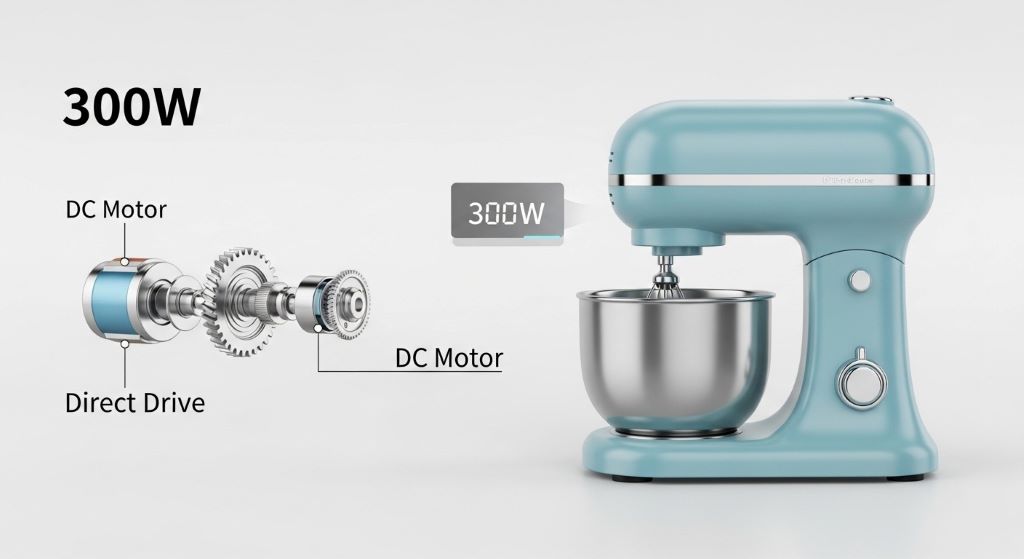
Wattage alone doesn’t determine mixer quality. Motor type significantly impacts performance and longevity. Two main designs dominate the market, each with distinct advantages.
Direct Drive Motors
These motors connect directly to the mixing attachments without gears. They typically run quieter and require less maintenance. However, they may struggle with very thick mixtures compared to gear-driven alternatives.
Gear-Driven Motors
Most professional machines use gear-driven systems. These provide better torque for heavy doughs and maintain speed under load more effectively. Furthermore, they distribute stress away from the motor, extending its lifespan.
The quality of internal gears matters as much as wattage. Metal gears outlast plastic ones and handle stress better. Therefore, check what materials manufacturers use in their construction.
Balancing Power with Other Features
Power is important, but other features contribute equally to user satisfaction. Consider how these elements work together before making your decision.
Bowl Capacity
A powerful motor paired with a small bowl limits your options unnecessarily. Match power to bowl size for optimal functionality. Larger bowls naturally require more power to mix contents evenly.
Speed Settings
More speeds give you better control over mixing action. At least six speeds work well for most baking needs. Additionally, having a very slow starting speed prevents ingredient splatter.
Build Quality
A sturdy metal housing indicates better construction than plastic bodies. Machines that vibrate or move during operation waste energy and create noise. Consequently, heavier units often perform more smoothly despite similar wattage.
Attachment Compatibility
Universal attachment hubs let you expand your mixer’s functionality. Pasta rollers, meat grinders, and food processors add value to your investment. However, these accessories require adequate power to operate effectively.
Power Consumption and Energy Efficiency
Higher wattage means higher electricity usage during operation. However, mixers run for short periods, so the actual cost difference remains minimal. A more efficient motor might use less electricity while providing similar performance.
Modern motors have improved significantly in recent years. Manufacturers now achieve better results with lower power consumption. Therefore, older high-wattage models might actually perform worse than newer mid-range options.
Consider how often you’ll use your mixer when evaluating energy costs. Daily users notice electricity consumption more than occasional bakers. Nevertheless, the annual cost difference between a 500-watt and 800-watt mixer used weekly remains quite small.
Professional Versus Home Use Considerations
The gap between home and professional mixers has narrowed considerably. Many home machines now rival commercial equipment in capability. Understanding the real differences helps you avoid overpaying for features you don’t need.
A commercial style mixer typically features all-metal construction and more powerful motors. These machines handle continuous operation in bakery settings. However, home bakers rarely need this level of durability.
Professional machines often include longer warranties reflecting their robust construction. They also maintain resale value better than consumer models. Additionally, they offer more precise speed control for technical recipes.
Home models focus on convenience features like dishwasher-safe parts and compact storage. They provide excellent performance for typical household needs without commercial pricing. Furthermore, they come in more color options to match kitchen decor.
Testing Claims and Real-World Performance
Manufacturers sometimes inflate specifications to make products sound more impressive. Reading verified customer reviews provides insight into actual performance. Pay attention to comments about specific tasks you plan to do regularly.
Independent testing organizations evaluate mixers under standardized conditions. These results offer objective comparisons between models. However, remember that your specific needs might differ from test protocols.
Try mixers in stores when possible to assess noise levels and ease of use. The feel of controls and overall ergonomics matter for long-term satisfaction. Additionally, you can gauge build quality through hands-on inspection.
Warranty and Longevity Considerations
A generous warranty suggests manufacturer confidence in their product. Look for at least one year of coverage on home models. Professional-grade machines should offer longer protection periods.
Motor warranties deserve special attention since replacement costs can equal buying a new mixer. Some brands offer lifetime motor warranties, which indicates exceptional quality. Conversely, short warranty periods might signal potential reliability issues.
Consider the availability of replacement parts when making your choice. Popular brands maintain better parts inventories and repair networks. Therefore, you can keep your mixer running for many years with proper maintenance.
Making the Right Choice for Your Kitchen
Start by honestly assessing your baking frequency and typical recipes. Occasional bakers who rarely tackle bread dough don’t need maximum power. A mid-range mixer between 400 and 600 watts serves most households perfectly well.
Serious bakers who regularly prepare dense doughs benefit from investing in higher power. A 1000 watt mixer provides headroom for any recipe you might attempt. Moreover, it handles increased use without premature wear.
Budget-conscious shoppers should focus on reliable brands with good warranties. A lower-wattage mixer from a reputable manufacturer often outlasts cheaper high-power alternatives. Quality engineering matters more than raw specifications.
Consider future needs when making your investment. If you might expand into bread baking or large batch preparation, buying extra power now prevents needing to upgrade later. However, avoid paying for features you’re certain you’ll never use.
Conclusion
Selecting the right stand mixer power level depends on your specific baking needs and habits. Most home bakers find that 400 to 600 watts provides ample power for regular use. However, those who frequently bake bread or prepare large batches benefit from choosing a heavy duty mixer with higher wattage ratings.
Remember that wattage alone doesn’t guarantee performance. Motor design, build quality, and gear systems all contribute to real-world capability. A well-engineered mid-power mixer often outperforms a poorly designed high-wattage model. Therefore, research specific models and read user reviews before purchasing.
Focus on matching power to your actual needs rather than simply buying the highest wattage available. This approach ensures you get good value while avoiding unnecessary features that inflate costs. With careful consideration, you’ll find a mixer that serves your kitchen perfectly for many years.
Frequently Asked Questions
Is a 300-watt mixer powerful enough for bread dough?
A 300-watt mixer can handle light bread doughs in small batches, but it will struggle with dense whole wheat or rye doughs. For regular bread baking, consider at least 500 watts. This extra power prevents motor strain and ensures consistent kneading throughout the process.
Do higher wattage mixers cost more to operate?
The electricity cost difference between mixer wattages is negligible for home use. Even if you use your mixer for an hour weekly, the annual cost difference between a 500-watt and 1000-watt model is typically less than five dollars. Motor efficiency and usage frequency matter more than raw wattage for energy costs.
Can I damage my mixer by using it for heavy doughs?
Yes, using a low-power mixer for tasks beyond its capacity can cause overheating and premature motor failure. Always check your mixer’s manual for recommended dough quantities and consistency. If your mixer slows down, makes unusual noises, or feels hot during use, you’re exceeding its capabilities.
Are commercial style mixers worth the extra cost for home use?
Commercial style mixers offer superior durability and power, but most home bakers don’t need these features. If you bake daily, run a home-based business, or regularly make large batches, the investment makes sense. However, occasional bakers get excellent results from quality home models at lower prices.
How do I know if my mixer has enough power for my recipes?
Check your mixer’s manual for maximum dough weight and consistency ratings. If it can handle the quantities you typically prepare without slowing down or overheating, it has adequate power. Most manufacturers specify maximum flour amounts for bread dough, which serves as a useful benchmark.
Related Topics:
Best Pasta Press Attachment for Home Kitchens: KSMPEXTA Tested
Colour Mistakes and Kitchen Design: How to Avoid them

