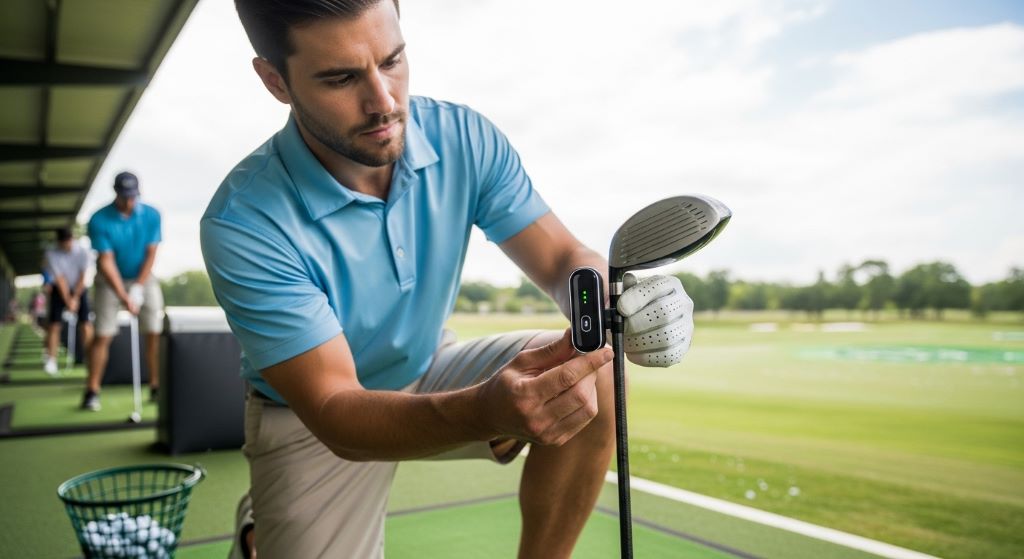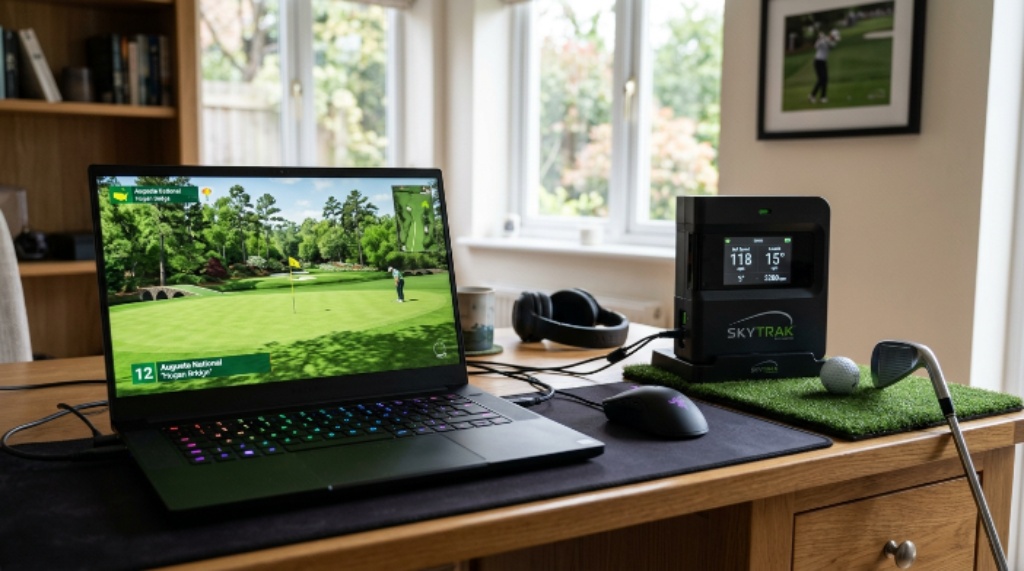
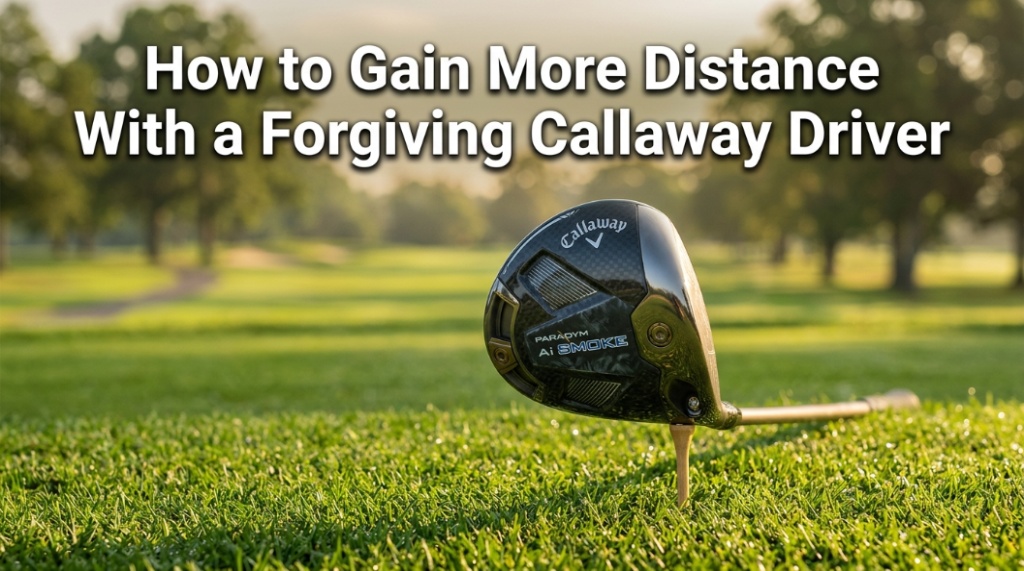
Most golfers don’t lose distance because they are weak. They lose it because their driver punishes tiny mistakes that happen in less than 0.4 seconds. The fastest shortcut to longer golf drives and to increase swing distance is not swinging harder — it’s using a forgiving Callaway driver that protects ball speed on off-center hits.
Many players struggle with drives that balloon, slice, or die short even after improving their swing. That creates frustration on long par 4s, forces difficult approach shots, and damages confidence off the tee. A forgiving driver changes that equation. Modern Callaway drivers combine high MOI designs, AI-engineered faces, optimized weight placement, and lightweight shafts to maintain speed and launch conditions even when contact is imperfect.
For golfers chasing more carry and total distance, forgiveness matters more than raw swing speed. According to launch monitor data from major fitting studies, losing center-face contact can reduce ball speed dramatically. A forgiving driver minimizes those losses and helps average golfers produce more consistent launch, spin, and dispersion.
This guide explains how to gain more distance with a forgiving Callaway driver, which features matter most, how setup affects performance, and what adjustments can immediately add yards without rebuilding your swing.
Why Does a Forgiving Callaway Driver Help You Hit Longer Golf Drives?
A forgiving Callaway driver helps you hit longer golf drives because it preserves ball speed and reduces distance loss on mishits.
Most amateur golfers rarely strike the exact center of the clubface. Traditional low-forgiveness drivers punish heel and toe strikes with lower ball speed, increased spin, and poor launch angles. Forgiving Callaway drivers are engineered to reduce those penalties.
Key technologies that help create more distance include:
- High MOI (Moment of Inertia) clubhead designs
- AI-designed Flash Face technology
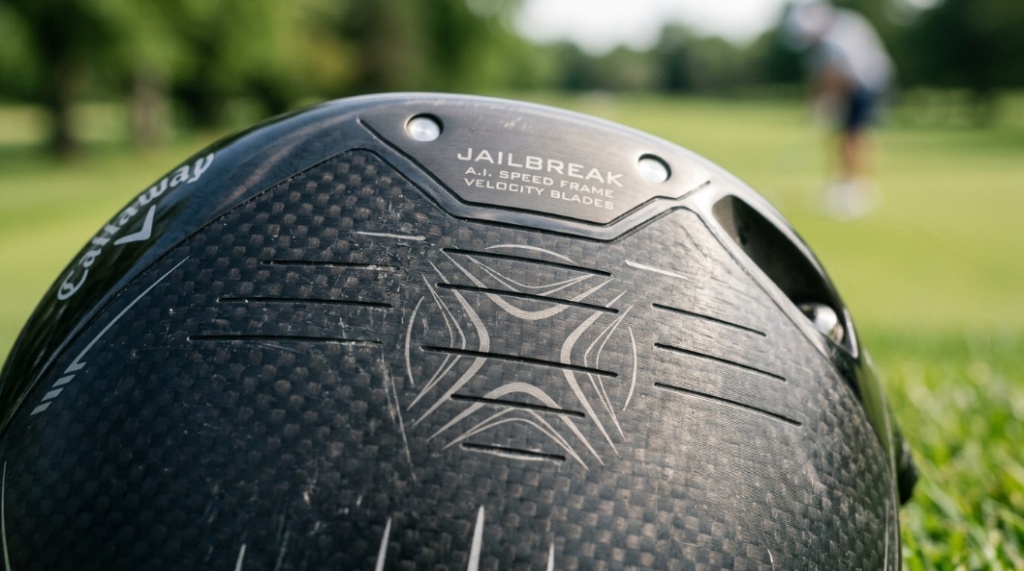
- Jailbreak structures for energy transfer
- Optimized center of gravity placement
- Adjustable weighting systems
- Lightweight shaft configurations
When these features work together, golfers often gain:
- More carry distance
- Higher launch with controlled spin
- Tighter dispersion
- Straighter drives
- More confidence swinging aggressively
Many players mistakenly believe distance comes only from swing speed. In reality, smash factor, launch angle, and spin efficiency are equally important. A forgiving driver improves those variables automatically.

Which Callaway Driver Is Best for Increasing Swing Distance?
The best Callaway driver for increasing swing distance is usually the model that combines forgiveness, optimized launch, and proper shaft fitting for your swing speed.
Different golfers need different setups. Some need lower spin. Others need higher launch. The ideal forgiving driver depends on your swing characteristics.
| Callaway Driver | Best For | Main Distance Benefit |
|---|---|---|
| Paradym Ai Smoke Max | Mid-to-high handicappers | High forgiveness with fast ball speeds |
| Paradym Ai Smoke Max D | Golfers who slice | Draw bias helps straighter, longer drives |
| Rogue ST Max | Consistency seekers | Stable launch and forgiveness |
| Epic Max | Moderate swing speeds | Easy launch with strong carry distance |
| Big Bertha Reva | Slow-to-moderate swingers | Lightweight speed generation |
Golfers with slice tendencies often gain the most distance from draw-biased models because sidespin reduction keeps the ball in play and improves rollout.
A 230-yard straight drive almost always beats a 260-yard slice into the trees.
How Does Forgiveness Affect Distance on Mishits?
Forgiveness affects distance by maintaining ball speed and reducing spin penalties when impact misses the center of the face.
Off-center strikes are the hidden distance killer for amateur golfers. A strike low on the heel or high on the toe changes:
- Launch angle
- Spin rate
- Energy transfer
- Face stability
- Directional control
Modern Callaway drivers use perimeter weighting and AI face optimization to maintain stability through impact.
For example:
- A traditional driver may lose 15–20 yards on a toe strike
- A forgiving Callaway driver may reduce that loss to 5–8 yards
That difference adds up over an entire round.
Golf launch monitor studies consistently show that average golfers hit fewer than half their drives from the center of the face. Forgiveness therefore becomes one of the biggest contributors to real-world driving distance.
Can a Driver Really Increase Swing Distance Without Swinging Harder?
Yes. A properly fitted forgiving driver can increase swing distance without requiring additional swing speed.
Distance comes from efficiency, not just effort.
Many golfers actually lose distance when trying to swing harder because they:
- Lose center-face contact
- Increase backspin
- Create poor sequencing
- Slice the ball
- Lower smash factor
A forgiving Callaway driver helps optimize:
- Ball speed
- Launch conditions
- Energy transfer
- Face stability
- Spin efficiency
That means golfers can achieve more distance while maintaining control.
In many fittings, players gain 10–20 yards simply from:
- Better shaft matching
- Correct loft selection
- Improved launch angle
- Reduced spin
- More forgiving clubhead design
What Loft Helps Produce Longer Golf Drives?
The ideal loft for longer golf drives usually ranges between 9° and 12°, depending on swing speed and launch conditions.
Many amateur golfers incorrectly assume lower loft equals more distance. In reality, insufficient loft often creates low-launch drives with poor carry.
General fitting guidelines:
| Swing Speed | Recommended Loft | Typical Benefit |
|---|---|---|
| Below 85 mph | 11°–12° | Higher carry distance |
| 85–95 mph | 10°–11° | Balanced launch and rollout |
| 95–105 mph | 9°–10.5° | Optimized spin and launch |
| 105+ mph | 8°–9° | Lower spin control |
Callaway’s adjustable hosel systems allow golfers to fine-tune loft settings without changing drivers entirely.
Sometimes adding just one degree of loft can produce:
- Higher launch
- Longer carry
- More forgiveness
- Straighter ball flight
Why Does Shaft Selection Matter for Increasing Swing Distance?
Shaft selection matters because the wrong shaft can reduce launch efficiency, timing, and face control during impact.
The shaft acts as the engine timing system of the golf club.
Important shaft variables include:
- Weight
- Flex
- Torque
- Kick point
- Length
Should You Use a Lighter Shaft for More Distance?
A lighter shaft can help many golfers generate more clubhead speed and increase swing distance.
However, going too light may reduce control. The goal is finding balance between speed and consistency.
What Shaft Flex Is Best for Longer Drives?
The best shaft flex depends on swing speed and tempo.
- Regular flex: slower swing speeds
- Stiff flex: moderate-to-fast swings
- X-stiff: elite speed players
Using a shaft that is too stiff often causes:
- Low launch
- Weak fades
- Reduced carry
Using one that is too soft may create:
- Excess spin
- Hooks
- Timing inconsistency
How Can You Increase Ball Speed With a Callaway Driver?
You can increase ball speed with a Callaway driver by improving strike quality, optimizing launch conditions, and using the correct driver setup.
Ball speed is the biggest predictor of driving distance.
Ways to increase ball speed include:
- Hitting slightly above center face
- Using low-spin golf balls
- Increasing tee height
- Improving attack angle
- Using the proper shaft
- Reducing excessive spin
Why Does Tee Height Matter?
Higher tee positioning encourages upward angle of attack, which can increase carry distance.
A good checkpoint:
- Half the golf ball should sit above the driver crown at address
This setup helps golfers launch the ball higher with lower spin.
What Attack Angle Produces Maximum Distance?
An upward attack angle typically produces longer golf drives.
Many amateur golfers hit down on the driver, creating excess spin and lower launch.
A positive attack angle can help create:
- Higher launch
- Lower spin
- More carry
- Improved smash factor
How Does Reducing Spin Increase Driving Distance?
Reducing excessive spin increases driving distance by improving rollout and optimizing launch efficiency.
Too much backspin causes drives to:
- Balloon upward
- Lose rollout
- Fall short
- Lose penetration into wind
Forgiving Callaway drivers help reduce excessive spin through:
- Forward CG placement
- AI face optimization
- Aerodynamic shaping
- Adjustable weighting
Most average golfers maximize distance around:
- 2000–3000 RPM spin rates
Spin optimization becomes especially important for players with moderate swing speeds.
Can a Draw-Biased Callaway Driver Add Distance?
Yes. A draw-biased Callaway driver can add distance by reducing slice spin and improving rollout.
Slices dramatically reduce total distance because:
- The ball curves excessively
- Energy transfers inefficiently
- Sidespin increases drag
- Rollout decreases
Draw-biased drivers reposition weight to help close the clubface during impact.
Benefits include:
- Straighter shots
- Reduced slice curvature
- Improved center contact
- More fairways hit
- Additional rollout
Many golfers immediately gain 15–25 yards simply by reducing slice severity.
What Swing Changes Help You Hit Longer Golf Drives?
Small swing adjustments often produce more distance than swinging harder.
The most effective swing improvements include:
- Wider takeaway
- Better shoulder rotation
- Improved weight transfer
- Positive attack angle
- Balanced finish position
Should You Swing Harder for More Distance?
No. Swinging harder without control usually reduces efficiency and center contact.
Professional golfers generate speed through sequencing, timing, and mechanics — not brute force.
How Important Is Center-Face Contact?
Center-face contact is critical for maximizing smash factor and ball speed.
Even slight mishits can reduce distance significantly.
To improve contact:
- Use impact tape during practice
- Shorten backswing slightly
- Maintain posture through impact
- Improve tempo consistency
What Golf Ball Works Best With a Forgiving Callaway Driver?
The best golf ball for a forgiving Callaway driver depends on your launch and spin profile.
Golf ball construction affects:
- Driver spin
- Launch angle
- Compression feel
- Ball speed
Lower compression golf balls often help moderate swing speed players gain carry distance.
Popular choices for distance-focused golfers include:
- Callaway Chrome Soft
- Titleist AVX
- TaylorMade Tour Response
- Srixon Q-Star
Matching your ball to your driver setup creates more consistent launch conditions.
Is a Professional Driver Fitting Worth It?
Yes. A professional fitting is one of the fastest ways to increase swing distance and improve driving consistency.
Many golfers use incorrect:
- Loft
- Shaft weight
- Shaft flex
- Lie angle
- Swing weight
A fitting session measures:
- Ball speed
- Launch angle
- Spin rate
- Attack angle
- Club path
- Carry distance
Small adjustments often create dramatic gains.
Real-world fitting examples commonly show:
- 10–25 yards gained
- Tighter shot dispersion
- Lower spin
- More fairways hit
Conclusion: What Is the Fastest Way to Gain More Distance With a Forgiving Callaway Driver?
The fastest way to gain more distance with a forgiving Callaway driver is to combine forgiveness, proper fitting, optimized launch conditions, and efficient swing mechanics.
Most golfers do not need a complete swing rebuild to hit longer golf drives. They need better launch, improved strike consistency, reduced spin, and a driver that protects ball speed across the face.
Modern Callaway drivers are specifically engineered to help average golfers maximize distance without sacrificing forgiveness. Features like AI-designed faces, high MOI construction, adjustable weighting, and optimized shafts help players hit straighter, longer drives even when contact is imperfect.
If you want to increase swing distance quickly, focus on:
- Proper loft selection
- Correct shaft fitting
- Improving attack angle
- Reducing slice spin
- Increasing center-face contact
Distance gains often come from smarter equipment choices rather than harder swings. Test different Callaway models, get fitted if possible, and track launch monitor numbers to identify what truly improves your performance off the tee.
The right forgiving driver can completely change how confidently you play every hole.
FAQ: How to Gain More Distance With a Forgiving Callaway Driver
Does a forgiving driver really help average golfers hit farther?
Yes. Forgiving drivers help average golfers maintain ball speed and reduce distance loss on mishits, leading to more consistent long drives.
What Callaway driver is best for golfers who slice?
Draw-biased models like the Callaway Paradym Ai Smoke Max D are designed to reduce slice spin and help golfers hit straighter, longer drives.
Can higher loft increase driving distance?
Yes. Many golfers gain more carry distance with higher loft because it improves launch angle and reduces low-launch weak shots.
How important is shaft fitting for longer golf drives?
Shaft fitting is extremely important because the correct shaft improves timing, launch conditions, ball speed, and overall consistency.
What is the ideal spin rate for maximum driver distance?
Most golfers maximize driver distance with spin rates between 2000 and 3000 RPM, depending on swing speed and launch angle.
Should beginners use forgiving drivers?
Yes. Forgiving drivers are ideal for beginners because they reduce mishit penalties and help build confidence off the tee.
How can I immediately increase swing distance?
You can immediately increase swing distance by improving tee height, optimizing loft, reducing slice spin, and using a properly fitted forgiving driver.
📌 Related Reads
Discover: Best Ways to Upgrade Old Plumbing Systems in Dallas, TX Properties
Explore: How to Find the Safest Fishing Life Jacket (Real Reviews That Matter)