Rubber fishing nets have become the gold standard — but that popularity has flooded the market with options ranging from excellent $40 nets to overpriced $150 nets with marginal improvements. An angler in Minnesota bought the most expensive rubber net he could find, thinking premium price guaranteed premium performance, then watched his fishing buddy land the same fish with a net costing half as much. The best rubber fishing net for your money isn’t the most expensive one — it’s the one that matches your fishing with the right size, mesh quality, and construction at a fair price. This fishing net comparison cuts through the marketing to show exactly where value lives in the rubber net market so you spend wisely without overpaying or buying junk.
The rubber fishing net market spans a wide price range, and the differences between a $40 net and a $120 net are often less about the rubber mesh (which works similarly across quality brands) and more about frame material, handle construction, and brand prestige. Understanding this helps you allocate spending where it matters — the mesh and frame quality that affect landing performance — and avoid paying premiums for cosmetic features and brand names that don’t improve your fishing. Here’s how to choose the best rubber fishing net for your needs without wasting a dollar on unnecessary extras.
Why Choose a Rubber Mesh Net Over Other Types?
Rubber mesh nets are superior because they don’t tangle hooks (faster unhooking), protect fish slime coats (better for catch-and-release), dry faster than nylon, and maintain their shape — advantages that make fishing more efficient and fish-friendly simultaneously.
Rubber mesh advantages over alternatives:
- No hook tangling: Hooks slide off rubber rather than snagging. This alone saves minutes per fish and prevents losses during the tangle-fight.
- Fish-friendly: Smooth, non-absorbent surface protects slime coat and prevents fin damage. Essential for catch-and-release.
- Quick-drying: Rubber doesn’t absorb water, so the net stays light and doesn’t develop mildew or odor like nylon can.
- Shape retention: Rubber mesh holds bag shape, keeping fish contained and making netting more predictable.
- Low maintenance: Rinse and go. No drying time needed, no odor buildup, no mesh rotting.
The tradeoff: rubber mesh nets cost slightly more than nylon and are marginally heavier. For most anglers, these minor tradeoffs are well worth the advantages — especially the hook-tangling elimination that makes fishing less frustrating and more productive.
What Determines the Price of a Rubber Fishing Net?
Frame material (aluminum vs. carbon fiber), handle construction, hoop size, brand reputation, and mesh quality determine price. Of these, frame material is the biggest price driver — carbon fiber costs 2–3x more than aluminum for comparable nets.
Price factors ranked:
| Factor | Impact on Price | Impact on Performance | Worth Paying For? |
|---|---|---|---|
| Frame material (carbon vs. aluminum) | High (+$40–$80) | Moderate (weight reduction) | Only if weight matters |
| Brand name | High (+$20–$50) | Low (prestige, not function) | Not usually |
| Hoop size | Moderate (+$10–$30) | High (match to fish) | Yes — match to needs |
| Handle quality | Moderate (+$10–$30) | Moderate (durability) | Yes — avoid flimsy |
| Mesh quality | Low-moderate (+$5–$15) | High (durability, function) | Yes — quality matters |
The value insight: the biggest price premiums (frame material and brand) don’t proportionally improve fishing performance for most anglers. The factors that matter most for actual fishing (mesh quality, appropriate size, handle durability) are available across price points. This creates the opportunity to buy smart — getting the performance that matters without paying for premiums that don’t.
What’s the Value Sweet Spot for Rubber Fishing Nets?
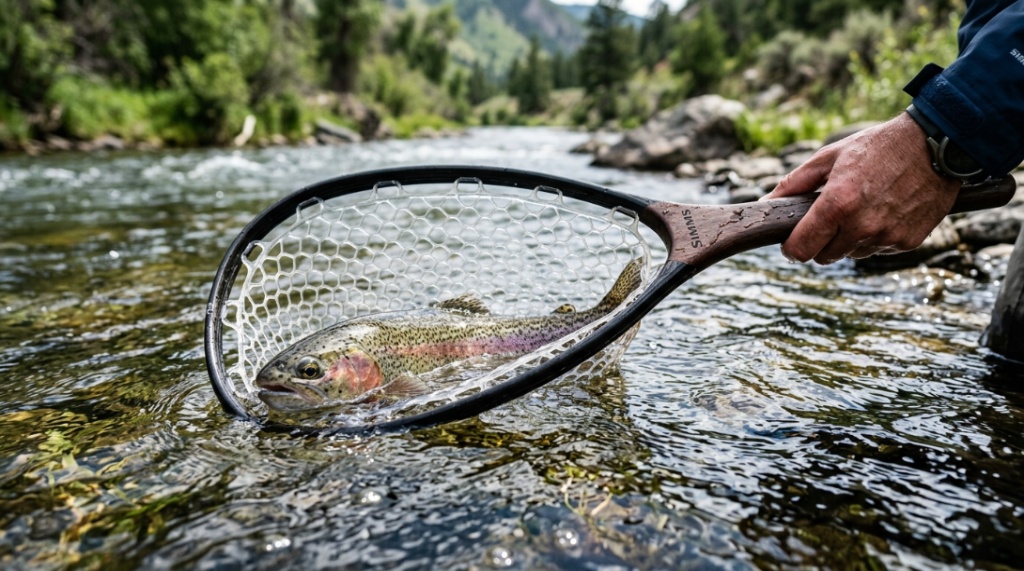
The value sweet spot is $40–$80. This range delivers quality rubber mesh, aluminum frames, adequate size options, and durable construction — the components that affect fishing performance — without premium charges for carbon fiber and brand names.
Price tier analysis:
- Under $30: Possible but risky. Rubber quality may be poor (stiff, cracks in cold), frame construction weak. Fine for casual use with careful selection.
- $40–$80 (sweet spot): Quality rubber mesh, aluminum frames, durable handles, multiple size options. Best value for most anglers. Delivers 90% of premium performance.
- $80–$120: Better frame materials (aircraft aluminum or carbon/aluminum hybrid), premium ergonomics. Worth it for serious anglers who carry nets all day.
- $120+: Full carbon fiber, premium brand, handcrafted options. For enthusiasts who want the lightest and best regardless of diminishing returns.
For most anglers, a $40–$80 rubber net delivers everything that improves fishing: quality mesh, adequate size, and durable construction. The primary benefit of spending more is weight reduction (carbon fiber) — which matters for all-day wading but not for boat fishing where the net sits in a holder.
How Do You Compare Rubber Mesh Quality Between Nets?
Compare rubber mesh quality by checking flexibility (should be soft and pliable, not stiff), durability (shouldn’t crack in cold weather), mesh opening size (should match your target species), and thickness (thicker resists tearing from hooks and fish teeth).
Quality indicators in rubber mesh:
- Flexibility: Quality rubber stays pliable in all temperatures. Cheap rubber stiffens in cold water and cracks over time. Flex test: the mesh should bend easily without cracking.
- Mesh opening size: Openings should be large enough that small fish fins don’t wedge through but small enough that fish can’t push through. Typically 1–1.5 inch openings for most freshwater.
- Thickness: Thicker rubber resists puncture from hook points and fish teeth. Quality nets use thicker rubber at stress points.
- Attachment security: How the mesh attaches to the hoop — quality nets have secure, reinforced mesh-to-hoop connections that won’t pull apart.
- UV resistance: Quality rubber includes UV inhibitors that prevent degradation from sun exposure. Cheap rubber becomes brittle after sun exposure.
The test most anglers miss: cold-weather flexibility. A rubber net that feels great in summer may crack and stiffen in Minnesota’s cold water and winter conditions. Read reviews from cold-climate anglers specifically addressing cold-weather performance. Quality rubber stays pliable down to near-freezing temperatures.
What Frame Material Offers the Best Value?
Aluminum offers the best value for most anglers — lightweight enough, very durable, corrosion-resistant, and significantly cheaper than carbon fiber. Carbon fiber is worth it only for weight-obsessed wading anglers who carry nets all day.
Frame material value comparison:
- Aluminum (best value): Strong, lightweight, corrosion-resistant, affordable. Handles any fish most anglers target. The practical choice for 80% of situations.
- Carbon fiber (premium): Lightest, strong, premium feel. Worth 2–3x the cost only if you wade all day and carry the net on your person where every ounce matters.
- Wood (traditional): Beautiful, heavier, limited to smaller nets. More aesthetic choice than practical. For stream anglers who value craftsmanship.
- Fiberglass: Budget-friendly, moderate weight, less rigid than aluminum. Adequate for lighter-duty use.
The honest value assessment: aluminum delivers 90% of the weight benefit at 50% of the cost of carbon fiber. Unless you hike miles to fishing spots or wade all day with the net on a sling, aluminum’s slight extra weight (2–4 oz more than carbon) won’t affect your fishing. Save the $50–$80 premium and put it toward other gear.
When upgrading your gear setup, matching the right net with your rod style ensures you never lose a prize catch at the water’s edge. For example, if you are frequently on the move or fishing tight streams, pairing a lightweight net with a portable Telescopic Fishing Rod Combo Effectively maximizes your mobility without sacrificing performance. Just like selecting the right mesh material, choosing a compact rod configuration keeps your setup efficient and budget-friendly. Speaking of global angling adventures, exploring unique waters often leaves anglers asking, What is Destination Travel In The World? as they search for remote bucket-list fisheries that test the absolute limits of their equipment.
What Size Rubber Net Should You Buy?
Match the net size to your largest realistic target fish, with the hoop at least 50% wider than the fish. For Minnesota walleye and bass, a 22–28 inch hoop covers most situations. For trout streams, 18–22 inches works well.
Size guide for common freshwater fishing:
- Panfish and small trout: 16–20 inch hoop. Compact, easy to carry while wading.
- Bass and average walleye: 22–26 inch hoop. Covers the most common freshwater gamefish.
- Large walleye and steelhead: 26–32 inch hoop. Adequate for fish in the 24–30 inch range.
- Musky and large pike: 32–40+ inch hoop. These powerful fish need large, deep nets.
Don’t overbuy size for species you don’t target — a larger net is harder to carry and manage. Match the net to your realistic fishing, not your dream fish. If you occasionally target larger species, a 26-inch net is a versatile middle ground that handles most freshwater fish without being unwieldy.
How Do You Maintain a Rubber Net to Maximize Its Lifespan?
Maintain a rubber fishing net by rinsing after use (especially saltwater), storing out of direct sunlight (UV degrades rubber), avoiding heat exposure, and inspecting for mesh damage periodically — simple care that extends rubber mesh life from 3 years to 5+ years.
Maintenance practices:
- Rinse after use: Fresh water removes minerals, algae, and fish slime that degrade rubber over time.
- Store out of UV: Sunlight breaks down rubber. Store indoors or in a covered space between trips.
- Avoid extreme heat: Don’t store in hot cars or near heat sources. Heat accelerates rubber degradation.
- Inspect mesh periodically: Look for cracks, tears, or stiffening. Address damage before it spreads.
- Don’t fold tightly: Tight folding can crease and weaken rubber mesh. Store with the mesh loose or hung.
- Replace mesh when degraded: Some nets offer replacement mesh bags — cheaper than replacing the entire net.
With basic care, a quality rubber mesh net lasts 5–7 years. The main enemies are UV exposure and heat — both easily avoided with proper storage. A net that lives in a garage rather than the truck bed lasts dramatically longer.
Conclusion
Choosing a rubber fishing net without wasting money means understanding where value actually lives: quality rubber mesh, adequate sizing, and durable frame construction — all available in the $40–$80 sweet spot without premium charges for carbon fiber and brand names. The rubber mesh itself (the key advantage over nylon) works similarly across quality brands at this price point, making the frame material and construction the main differentiators.
Match the net size to your target fish, choose aluminum for value or carbon fiber only if weight is a genuine priority, verify mesh quality through flexibility and cold-weather reviews, and maintain with basic UV-avoidance and rinsing. Follow this approach and your rubber net delivers the advantages of no-tangle hooks, fish-friendly handling, and quick-drying convenience for years — at a price that leaves money for more fishing trips. Smart buying means knowing what matters and refusing to pay for what doesn’t.
What fish do you target and how do you carry your net? Share in the comments — I’ll help you identify the specific size, frame material, and price point that gives you maximum value without waste.
Frequently Asked Questions
How much should a rubber fishing net cost?
The value sweet spot is $40–$80 for a quality rubber mesh net with an aluminum frame. This range delivers everything that improves fishing performance. Below $30, quality becomes inconsistent. Above $80, you’re mostly paying for carbon fiber frames and brand names that don’t improve fish-landing performance for most anglers.
What makes one rubber net better than another?
Key differences: rubber flexibility (stays pliable in cold), mesh durability (resists cracking and puncture), frame material (aluminum vs. carbon fiber weight), mesh opening size (appropriate for your target species), and overall construction quality (frame-to-handle junction strength). Price mainly reflects frame material, not rubber quality.
Is a carbon fiber rubber net worth the extra money?
Only for anglers who carry nets all day while wading — the 2–4 oz weight savings matters over hours of hiking and wading. For boat fishing (net sits in a holder) or short-distance shore fishing, aluminum delivers the same function at 50% of the cost. Match your spending to whether weight actually affects your fishing.
Do rubber nets work in cold weather?
Quality rubber nets stay pliable in cold water and cold air. Cheap rubber stiffens and cracks in cold conditions. When buying for cold-weather fishing (Minnesota, northern states), read reviews specifically from cold-climate anglers confirming the mesh stays flexible. This is the main quality difference in rubber mesh.
How long does a rubber fishing net last?
A quality rubber mesh net lasts 5–7 years with proper care (avoiding UV and heat, rinsing after use). Without care, UV exposure and heat degrade rubber in 2–3 years. Store out of direct sunlight, avoid hot cars, and rinse after use. Some nets offer replacement mesh bags that extend the frame’s useful life further.
What size rubber net is most versatile?
A 22–26 inch hoop is the most versatile for freshwater fishing — large enough for most bass and walleye (the most commonly targeted gamefish) while manageable to carry and store. This size handles 80% of freshwater fishing situations. Size up only if you regularly target fish over 24 inches.