
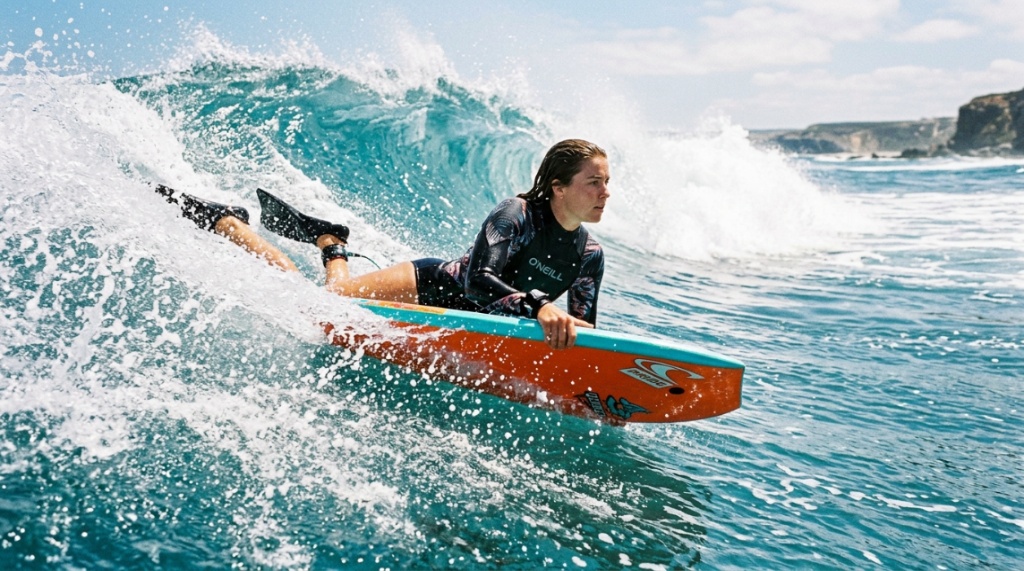
You’ve felt the sting of sticker shock at the surf shop. A decent wave pool board costs more than your rent, yet that $40 foam plank on clearance looks about as reliable as a paper boat. The problem is real: you want to catch waves without destroying your bank account or your spine. You’re searching for cheap bodyboards durable bodyboards that actually hold up on a six-foot face. The good news is you don’t need a pro-model price tag to get a board that snaps, slides, and survives. This guide cuts through the marketing fluff and shows you exactly where to find performance at a budget price.
What Makes a Bodyboard Affordable Without Losing Performance?
Core Material Matters More Than Brand Name
Performance on a budget starts with the core. PE (polyethylene) cores are the sweet spot for value. They are heavier than PP (polypropylene) but offer excellent slide and durability for a fraction of the cost. A good PE core board will handle warm-water waves and last multiple seasons. Avoid cheap EPS foam cores found in toys—they waterlog quickly and snap under pressure.
Slick Bottom Material Affects Speed
Look for a HDPE (high-density polyethylene) slick bottom. It’s the industry standard for production boards and provides reliable speed down the line. Budget boards often use a thinner HDPE layer, which is fine for most conditions. Avoid boards without a slick bottom entirely—those are pool toys, not bodyboards.
Stringers Add Life Without Adding Cost
Even cheap boards benefit from a stringer. A single, center carbon stringer stiffens the board and prevents folding under your chest. This is the single most important performance feature you can get for under $80. If the board has zero stringers, you’re buying a temporary board, not a durable one.
Which Bodyboard Features Should You Never Compromise On?
Nose Shape and Rocker
Do not buy a board with a flat, round nose if you plan on duck-diving or riding steep waves. A crescent tail and a moderate single-to-double concave bottom are non-negotiable for affordable performance. The rocker (curvature) should be moderate—too flat, and you pearl; too aggressive, and you lose speed.
Rail Thickness for Hold
Cheap boards often have overly thick, rounded rails that feel like a door. You want rails that are approximately 5/8 inch thick with a slight bevel. This gives you enough foam for buoyancy but allows your inside arm to grip the rail during a turn. Test the rail by squeezing it—if it feels like a marshmallow, pass.
Tail Shape for Control
The tail shape dictates your turning ability. A crescent tail provides the best control for the price. Avoid bat tails (too slow) or diamond tails (too stiff) on budget boards. A crescent tail helps you hold a line on the wave face and gives you leverage for bottom turns without requiring elite skill.
How Can You Spot a Durable Budget Bodyboard Before Buying?
Check the Mesh Skin Layer
Peel back the deck pad slightly if possible. Look for a layer of mesh embedded between the foam and the plastic skin. This mesh prevents the deck from de-laminating after a season of sun exposure and wax. Boards without mesh will bubble and peel within months.
Flex the Board Vertically
Grip the nose and tail and gently flex the board. It should bend with some resistance but not crease. If you hear crackling sounds or see wrinkles in the slick bottom, the foam is low density and will snap during a heavy wipeout. Good budget boards flex uniformly without noise.
Inspect the Rail Banding
Run your finger along the entire rail edge. There should be a smooth, consistent transition from deck to rail. Cheap boards often have rough edges or visible glue lines. These imperfections catch water resistance and lead to rail cracks after a few sessions. Smooth bands indicate better manufacturing.
Why Are Some Cheap Bodyboards More Durable Than Expensive Ones?
Production Volume Lowers Cost Without Lowering Quality
Large brands like BZ, Morey, and Custom X run high-volume production lines. They use the same molds and core materials as their mid-range boards but with simpler graphics and fewer resin coats. You get a structurally identical board for half the price because you aren’t paying for custom labor or limited-edition branding.
Board Construction vs. Marketing Hype
Expensive boards often use exotic materials like carbon fiber or stringerless PP cores that require precise factory conditions. These materials improve performance but also introduce fragility. A budget PE board with a single stringer is actually more forgiving to dings, car racks, and beginner handling than a high-end racing board.
Recycled or Surplus Foam
Some budget boards use recycled PE foam from surplus production runs. This foam is identical in density to fresh foam; it just carries a different batch number. Brands sell these as budget models or “blem” boards. The performance is identical, but the color might be slightly off or the graphic misaligned.
What Is the Best Core Material for a Budget Board?
PE Foam for All-Round Durability
PE (polyethylene) is the standard for budget performance boards. It is slightly heavier than PP, but it offers better slide on slow waves and is significantly more impact-resistant. PE foam absorbs dings better and does not snap easily. For a first board or a travel board, PE is the most reliable choice.
PE vs. PP: Which Saves More Money Long-Term?
PP boards cost 30-50% more than PE boards and are stiffer, which suits advanced riders. However, PP is more brittle. A cheap PP board will chip and crack faster than a cheap PE board. Unless you are an expert rider charging hollow waves, PE foam delivers better value and longer lifespan.
When EPS Foam Makes Sense (and When It Doesn’t)
EPS foam is ultra-light but extremely fragile. It is used in soft-top surfboards and foamie bodyboards for beginners. Do not buy EPS for bodyboarding unless you are a small child or using it exclusively in a pool. EPS cannot withstand the torsion of a steep drop and will compress permanently after a few landings.
How Do You Match a Budget Board to Your Weight and Height?
Calculate the Right Length
Your bodyboard should reach somewhere between your belly button and your chest when standing upright. A board that is too short sinks on paddling; a board too long feels sluggish. For budget boards, err on the longer side if you are between sizes, because cheaper foam is slightly less buoyant.
Width and Thickness for Floatation
Budget boards often come in standard 20-21 inch widths. If you weigh over 180 pounds, look for a 21.5 inch or wider board. Thickness should be at least 2 inches for adults. A thinner budget board will lack float and make wave catching exhausting. Measure the thickness at the center point before buying.
Ideal Sizing Chart for Budget Bodyboards
| Weight (lbs) | Recommended Length | Recommended Width | Core Type |
|---|---|---|---|
| 50 – 90 | 36 – 38″ | 19 – 20″ | PE (Soft) |
| 90 – 140 | 39 – 41″ | 20 – 20.5″ | PE |
| 140 – 180 | 41 – 43″ | 20.5 – 21″ | PE or PP |
| 180 – 220 | 43 – 45″ | 21 – 21.5″ | PE with Stringer |
| 220+ | 45 – 46″ | 21.5 – 22″ | PE (Thick Core) |
Where Should You Buy Affordable Bodyboards That Perform?
Online vs. Local Surf Shops
Online retailers like eBodyboarding.com and Amazon offer the widest selection of budget boards under $100. However, local surf shops often carry last-season’s models at 40% off. Visit both. Ask the shop if they have any factory seconds or blem boards. These are identical to retail models but have minor cosmetic flaws and are deeply discounted.
Recognizing Reliable Budget Brands
Stick with established brands: BZ, Morey, Custom X, and Science make entry-level boards that actually work. Avoid generic no-name boards sold in beachside souvenir shops. Those boards use toy-grade foam and snap within two sessions. A reputable brand’s entry-level model is always better than a knockoff’s top-tier.
What to Look for in Online Listings
Read the product description carefully. Look for the words “PE core,” “HDPE slick,” and “crescent tail.” If the listing only says “foam bodyboard” with no specifications, move on. Check reviews specifically for durability complaints, like de-lamination or rail cracking. Sorting by “recent reviews” gives the most current quality info.
Can a Budget Bodyboard Handle Bigger Waves?
Limitations of Cheap Foam in Heavy Surf
A budget PE board can handle waves up to 6-8 feet with good technique. Beyond that, the foam flexibility becomes a liability. The board will flex excessively during steep drops, causing you to lose control. For double overhead waves, you need a stiffer PP core or a PE board with carbon stringers and heavier resin saturation.
Modifications That Extend Performance
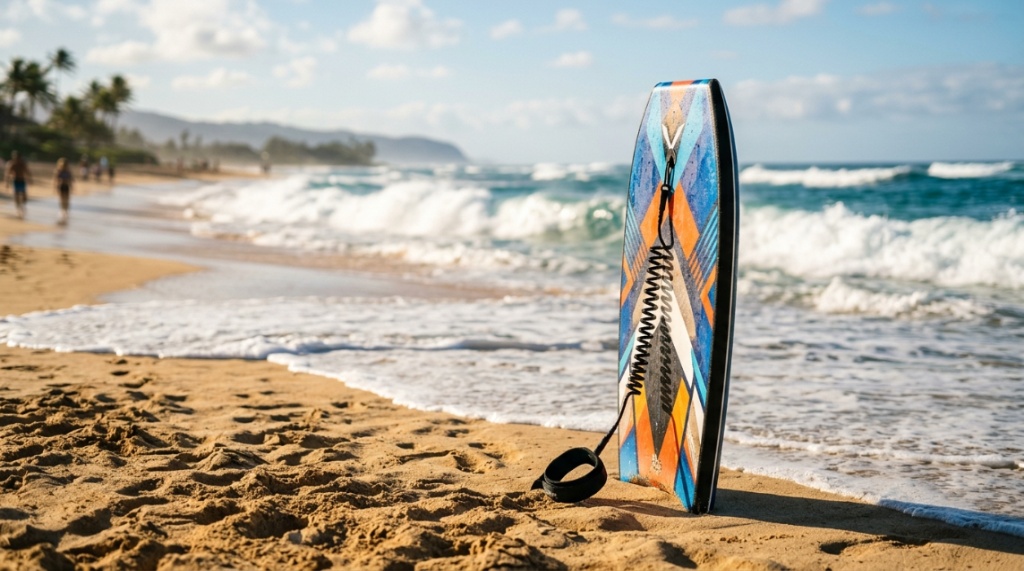
You can upgrade a budget board slightly. Adding a quality leash plug (installed professionally) prevents snap-offs. Using a traction pad instead of wax adds grip without weight. Replacing the plastic leash with a coiled urethane leash reduces drag. These small upgrades cost under $30 and make the board feel premium.
When to Invest in a More Expensive Board
If you consistently ride waves overhead, spend the extra money on a PP board with multiple stringers. Budget boards are excellent for learning, warm water travel, and small-to-mid-day surf. But your safety and performance in heavy conditions justify the upgrade. Do not push a $60 board into 10-foot surf—it is not designed for that.
Which Affordable Bodyboard Models Consistently Rank High?
Morey Mach 7 (Entry Level Standard)
The Morey Mach 7 is the best-selling budget board for good reason. It features a PE core, single stringer, and crescent tail. It’s available in sizes from 38 to 44 inches. The slick bottom is fast enough for mushy waves, and the deck is durable. You can find it regularly between $60 and $80. It performs far above its price point.
BZ Pro Model (Value Pick)
BZ boards are often overlooked but offer excellent construction for the cost. The BZ Pro uses a high-density PE core with two stringers on some models. It is stiffer than the Morey Mach 7 and rides better in steep waves. Prices range from $70 to $100 depending on the graphic. Check the listing carefully to confirm stringer count.
Custom X Core (Durability Leader)
Custom X builds boards in the USA and are known for overbuilding their economy line. Their Core model uses a thick PE core and a durable HDPE slick. It is heavier than other budget boards, but that weight gives it momentum in choppy water. The Core is nearly indestructible for the price. Expect to pay $90 to $110.
How Do You Maintain a Cheap Bodyboard to Make It Last Longer?
Rinse and Dry After Every Session
Saltwater corrods the slick bottom glue and weakens the foam over time. Rinse your board with fresh water after every use. Dry it out of direct sunlight. Do not leave it in a hot car trunk—heat de-laminates the skin from the core. A board that costs $60 can last two seasons if properly cared for.
Store It Flat, Never on Its Nose
Never stand your bodyboard on its tail or nose for storage. The weight of the board can warp the rocker. Always store it flat on a shelf or rack. If you transport it in a car, place it deck-side up and avoid stacking heavy objects on top. Compression dings are permanent and ruin performance.
Once you find a great board that balances cost and durability, taking care of it will extend its lifespan significantly. Just like choosing a Surfboard Wall Mount Without Sacrificing Quality to protect your surfboard investment, storing your new bodyboard out of direct sunlight and off the floor prevents core warping and keeps the slick skin intact for your next session.
Repair Small Dings Immediately
A small crack in the slick bottom will let water seep into the core. Waterlogged foam adds pounds of weight and destroys buoyancy. Keep a tube of bodyboard-specific resin or waterproof epoxy on hand. Fill any ding as soon as you see it. Delaying a repair by one week can turn a $60 board into trash.
Is There a Difference Between a Toy Board and a Budget Performance Board?
Key Distinguishing Features
Toy boards have no stringer, no slick bottom, and use soft, open-cell foam. They are designed for floating in pools, not surfing. Budget performance boards have a slick bottom, at least one stringer, and a crescent tail. The difference is night and day. A toy board will fold like paper on a two-foot wave; a budget board will hold a line.
Price Point Red Flags
Any bodyboard priced under $35 is likely a toy. Boards between $40 and $80 can be good if they are from a known brand. Boards between $80 and $120 represent the sweet spot for budget performance where you get real materials without the premium markup. If a board looks too cheap, it almost certainly is.
Consequences of Using a Toy Board in Real Waves
Using a toy board in surf over waist-high is dangerous. The board can fold under your chest, causing you to lose buoyancy and require a rescue. The leash plugs often rip out, sending the board flying. The foam can break apart on impact, creating debris. Never let a child or beginner use a toy board in the ocean.
Finding cheap bodyboards durable bodyboards that perform is about knowing what materials and features matter. A board with a PE core, single stringer, crescent tail, and HDPE slick bottom will catch waves well below $100. Avoid toy boards, check for mesh layers, and buy from a reputable brand. Your wallet and your wave count will both improve.
Frequently Asked Questions
What is the cheapest bodyboard that is actually good for surfing?
The Morey Mach 7 is widely considered the best value board for under $80. It has a PE core, single stringer, and crescent tail, making it a legitimate surfboard for small to medium waves. It is not a toy board.
How long does a cheap bodyboard typically last?
With proper care including rinsing after each use and storing flat, a budget PE board can last one to two full seasons of regular weekend surfing. Neglect can shorten this to just a few months.
Can adults use cheap bodyboards?
Yes, but you must match the board size to your weight. Look for boards that are at least 42 inches long and 21 inches wide for adults over 150 pounds. Cheap boards often only come in smaller sizes.
Is a stringer necessary on an affordable bodyboard?
Yes, a stringer is essential even on budget boards. A single carbon stringer prevents the board from folding under your chest during drops and turns. Boards without stringers are for pool play only and should never be used in waves.
Can you duck dive a cheap bodyboard?
Yes, but with limited success. PE core budget boards are heavier and less stiff than expensive boards, making duck diving harder. Some brands like Custom X offer stiffer budget boards with better sink weight for duck diving.
What is the difference between a cheap board and a mid-range board?
Mid-range boards ($150-$250) typically use PP foam cores or multiple stringers, which offer superior stiffness and speed. Cheap boards ($50-$100) use PE foam and single stringers, which are softer and slower but more durable and forgiving.
Are expensive bodyboards worth the extra money for a beginner?
No. A beginner will not notice the performance difference between PE and PP foam. A quality budget board like the BZ Pro or Morey Mach 7 is the better choice. Invest the savings in fins, a leash, or surf lessons instead.