
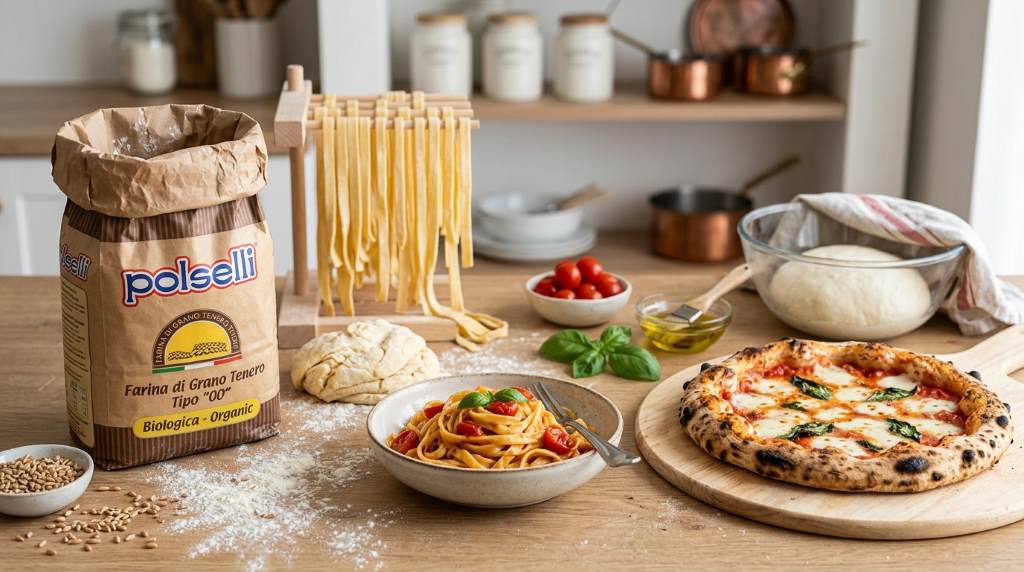
Yes, POLSELLI Type 00 Organic Flour is a strong choice for homemade pizza and fresh pasta. Its W220 strength suits shorter fermentation, while its fine milling supports smooth dough handling. In fact, many home cooks need only a reliable dough making flour rather than a highly specialized blend. A typical pizza dough uses roughly 55% to 65% hydration, while fresh pasta often uses considerably less water.
Key Takeaways
- POLSELLI Organic Type 00 uses a finely milled Italian flour profile.
- Its published W220 strength favors shorter, direct fermentation schedules.
- The flour works particularly well for homemade pizza and fresh pasta.
- Its 11.5% protein level offers moderate structure without excessive toughness.
- Long, multi-day fermentation usually calls for a stronger flour.
- Accurate weighing, dough temperature, and fermentation control improve results.
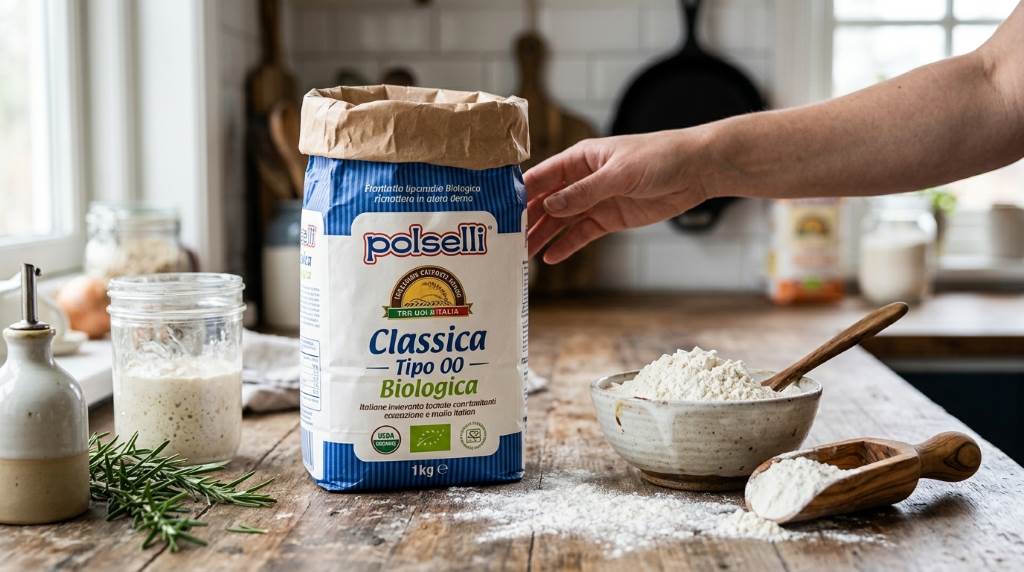
What Makes POLSELLI Type 00 Organic Flour Different?
POLSELLI Type 00 Organic Flour stands out because it combines fine milling with moderate dough strength. The result feels approachable for home cooks who make pizza without elaborate fermentation systems. For kitchen-focused projects, these ways to refurb a kitchen can also improve your cooking workspace.
The term Type 00 primarily describes the flour’s milling refinement. Therefore, you should not assume every Type 00 flour offers identical protein, strength, or fermentation performance. POLSELLI’s W220 rating provides more useful information about how the dough should behave.
The flour contains approximately 11.5% protein, according to current product listings. That level gives dough enough gluten development for pizza while keeping the texture relatively tender. Consequently, it makes sense for cooks who value flexibility over extreme dough strength.
POLSELLI also positions this organic flour for direct dough applications and shorter fermentation periods. That recommendation matters because fermentation length strongly influences dough structure, flavor, extensibility, and handling. Matching the flour to your schedule prevents many common pizza-making problems.
What Does W220 Actually Mean?
W220 indicates moderate flour strength rather than a quality score. Generally, higher W values indicate greater resistance to fermentation and stronger dough development.
However, stronger flour does not automatically produce better pizza or pasta. Instead, flour strength should match your fermentation time, hydration, temperature, and baking method. POLSELLI’s W220 profile therefore suits practical recipes that do not require prolonged maturation.
How Does POLSELLI Organic Flour Perform in Pizza Dough?
For pizza, POLSELLI Organic Type 00 produces dough that feels smooth, manageable, and reasonably extensible. Its moderate strength makes hand shaping easier for cooks who dislike stubborn dough. You can also improve the surrounding workspace with these styles of kitchen cabinet doors while creating a dedicated baking area.
Start with moderate hydration rather than immediately pushing the flour toward very wet dough. Around 58% to 62% hydration provides a sensible starting point for many home pizza formulas. Then adjust gradually after learning how the flour responds in your kitchen.
For a simple formula, combine 100% flour with about 60% water and 2.5% to 3% salt. Add yeast according to your fermentation schedule, then mix until the dough becomes cohesive. Avoid adding excessive flour during kneading because that can create unnecessary firmness.
After mixing, give the dough sufficient resting time before aggressive handling. A short rest allows the flour to hydrate and makes gluten development easier. Consequently, you can often achieve a smoother dough with less kneading.
What Crust Can You Expect?
POLSELLI Organic Type 00 can produce a tender crust with a pleasant balance between softness and chew. However, your oven temperature influences the final texture more than the flour alone. A hotter baking environment generally creates stronger oven spring and faster surface browning.
In a conventional home oven, preheat thoroughly before launching the pizza. A baking steel or stone can improve heat transfer and help the base set quickly. Meanwhile, keeping toppings moderate prevents the center from becoming wet.
Do not judge the flour solely by leopard spotting around the crust. Very high-temperature pizza ovens create visual effects that household ovens may struggle to reproduce. Instead, evaluate the dough by its stretch, rise, tenderness, browning, and overall flavor.
Best Fermentation Strategy
POLSELLI’s W220 strength makes shorter fermentation a sensible starting point. Direct dough methods work particularly well when you want pizza within the same day. For longer refrigeration periods, monitor the dough closely because excessive fermentation can weaken its structure.
Temperature matters just as much as elapsed time. A warm kitchen accelerates fermentation, while refrigeration slows yeast activity considerably. Therefore, use dough temperature as a practical control rather than following the clock blindly.
Is POLSELLI Type 00 Good for Fresh Pasta?
Yes, POLSELLI Type 00 works especially well for delicate fresh pasta. Its fine texture creates smooth dough that rolls comfortably through a pasta machine. A thoughtfully organized kitchen also makes repeated pasta preparation easier, as explained in something about a kitchen.
Fresh pasta needs different characteristics from pizza dough. You generally want a smooth, cohesive dough that rolls thinly without becoming excessively elastic. POLSELLI’s fine milling supports that goal when you knead and rest the dough correctly.
For egg pasta, start with a traditional flour-to-egg approach and adjust gradually. The exact ratio depends on egg size, flour absorption, humidity, and desired dough firmness. Avoid adding liquid too quickly because small adjustments can significantly change the final texture.
Which Pasta Shapes Work Best?
This flour works particularly well for sheets, tagliatelle, fettuccine, lasagna, and filled pasta. Its smooth texture helps create clean sheets that pass through pasta rollers efficiently. Ravioli also benefits because thin sheets can surround fillings without overwhelming them.
For filled pasta, rest the dough before rolling it very thin. Proper resting reduces excessive elasticity and makes shaping more predictable. Keep unused dough covered because exposed pasta dough can develop a dry surface quickly.
However, fresh Type 00 flour does not replace durum semolina for every pasta application. Traditional dried pasta depends heavily on durum wheat’s distinctive structure and firmness. Therefore, choose POLSELLI primarily when your goal involves tender, fresh pasta.
POLSELLI Organic Type 00 Compared With Other Flours
Comparing POLSELLI with another Type 00 flour requires more than checking the package label. Protein percentage, W strength, wheat selection, milling, fermentation guidance, and intended use all influence performance.
POLSELLI Organic Type 00 occupies a moderate-strength position within the company’s broader flour range. Its W220 rating makes it more approachable for shorter fermentation than stronger pizza flours. Meanwhile, higher-strength options provide greater structural support for extended fermentation.
For example, a W270 flour generally offers more fermentation tolerance than W220. A W300 or stronger flour can provide even more support for long refrigeration and higher hydration. Therefore, experienced pizza makers should select flour according to their recipe rather than brand loyalty.
Protein percentage also deserves careful interpretation. A higher protein number can indicate greater potential structure, but protein quality matters too. Consequently, two flours with similar protein percentages can still behave differently.
POLSELLI Organic Type 00 vs. Bread Flour
Bread flour typically develops stronger gluten and produces a chewier, more substantial structure. POLSELLI Type 00 generally aims for a finer, softer dough experience. As a result, each flour can excel under different baking conditions.
Choose bread flour when you want substantial chew, strong structure, or certain high-hydration bread formulas. Choose POLSELLI when smooth handling and delicate texture matter more. Your preferred eating texture should guide the decision.
POLSELLI Organic Type 00 vs. Semolina
Semolina comes from durum wheat and provides a noticeably firmer, more resilient pasta texture. POLSELLI Type 00 uses soft wheat characteristics that favor smoother, more delicate dough. Neither flour is universally superior because they serve different culinary purposes.
For ravioli and silky pasta sheets, Type 00 can provide an excellent texture. For many dried pasta shapes, durum-based flour remains the more traditional choice. Blending the two can also create interesting results when a recipe supports experimentation.
How to Get Better Results From POLSELLI Flour
Weigh every ingredient with a digital scale instead of relying on measuring cups. Flour volume varies with packing, humidity, and handling, so weight produces more consistent dough. This single habit can improve repeatability more than many advanced techniques.
Next, control your water temperature according to your fermentation plan. Warm water accelerates yeast activity, while cooler water provides more time during mixing and fermentation. Aim for a predictable final dough temperature rather than guessing from room conditions.
Give the dough enough time to hydrate before judging its consistency. Freshly mixed dough can feel rough or stiff before the flour fully absorbs the water. A short rest often reveals a softer and more cohesive dough.
Use gentle handling after fermentation begins. Excessive degassing removes useful gas and can reduce the airy structure you want around pizza edges. Instead, preserve the dough’s internal development while shaping it.
A Practical Pizza Workflow
For a dependable starting method, weigh the flour and water separately before mixing. Add yeast and salt according to your chosen fermentation schedule, then mix until evenly incorporated. Rest the dough briefly before developing it further.
Shape the dough into a smooth ball without tearing the surface. Let it ferment until visibly expanded rather than relying exclusively on a fixed timer. Then gently stretch the dough while preserving the outer rim.
Keep toppings restrained, especially when using a domestic oven. Excess sauce, cheese, or wet vegetables can overwhelm a moderately thin crust. Bake on a thoroughly preheated surface until the base develops the texture you prefer.
A Practical Fresh Pasta Workflow
Begin by forming the flour into a mound and creating a central well. Add your eggs or selected liquid gradually while incorporating flour from the sides. Knead until the dough becomes smooth, firm, and cohesive.
Wrap the dough and let it rest before rolling. Resting relaxes the gluten network and makes thin rolling considerably easier. Then pass the dough through progressively thinner settings until you reach your preferred thickness.
Dust sparingly during rolling and cutting. Too much loose flour can make the finished pasta taste dusty and interfere with sauce adhesion. Use just enough flour to prevent sticking.
Common Mistakes to Avoid
One common mistake involves assuming every Type 00 flour works identically. The 00 designation describes milling refinement, not a universal fermentation profile. Always check the specific flour’s strength and intended application.
Another mistake involves forcing long fermentation onto a moderate-strength flour. Extended fermentation can eventually weaken dough structure and make shaping difficult. Choose a stronger flour when your recipe requires several days of maturation.
Home cooks also frequently add too much flour during kneading. This approach can correct stickiness temporarily but may produce dense, firm dough. Instead, allow hydration and gluten development to progress before making major adjustments.
Finally, avoid judging pizza flour without considering your oven. Flour cannot compensate completely for insufficient heat, poor preheating, or excessive toppings. Evaluate the entire process before blaming the ingredient.
Who Should Buy POLSELLI Type 00 Organic Flour?
POLSELLI Organic Type 00 suits home cooks who regularly make pizza and fresh pasta. It also makes sense for anyone who wants organic Italian flour with moderate dough strength. Its versatility reduces the need for multiple specialized flours in a small kitchen.
It particularly suits same-day pizza makers and cooks who prefer relatively straightforward fermentation. Fresh pasta enthusiasts can also benefit from its smooth milling and delicate dough characteristics. Beginners may appreciate its manageable handling compared with more specialized strong flours.
However, consider another flour if you routinely ferment pizza dough for two or three days. Stronger flour can maintain structure better during extended refrigeration. Likewise, choose durum-based flour when traditional dried pasta represents your primary goal.
Final Verdict
POLSELLI Type 00 Organic Flour earns a strong recommendation for versatile home cooking. Its W220 strength, fine milling, organic positioning, and moderate protein level create a practical combination. Most importantly, the flour performs best when your recipe matches its intended fermentation range.
For pizza, expect smooth handling, good extensibility, and a tender finished crust when you control fermentation carefully. For fresh pasta, expect smooth sheets and delicate textures that suit many classic preparations. Those strengths make this flour more useful than a narrowly specialized option for many households.
The main limitation involves fermentation length. If your routine centers on long cold fermentation, choose a stronger flour instead. Otherwise, POLSELLI offers an appealing balance between versatility, handling, and Italian-style flour characteristics.
Ready to test it in your own kitchen? Start with a simple pizza or fresh pasta recipe, weigh every ingredient, and record your results. Once you understand how the flour behaves, adjust hydration and fermentation gradually for your preferred texture.
Frequently Asked Questions
Is POLSELLI Type 00 Organic Flour good for pizza?
Yes, it works particularly well for homemade pizza using direct dough and shorter fermentation schedules.
Is POLSELLI Type 00 Organic Flour good for pasta?
Yes, its fine milling works especially well for fresh pasta sheets, ravioli, lasagna, and noodles.
What does W220 mean in POLSELLI flour?
W220 indicates moderate dough strength that generally suits shorter fermentation rather than prolonged maturation.
Can POLSELLI Organic Type 00 handle long fermentation?
It can handle some extended fermentation, but stronger flour generally provides better structural stability over several days.
Is POLSELLI Organic Type 00 worth buying?
Yes, it is worth buying when you want organic Italian flour for pizza and fresh pasta.
