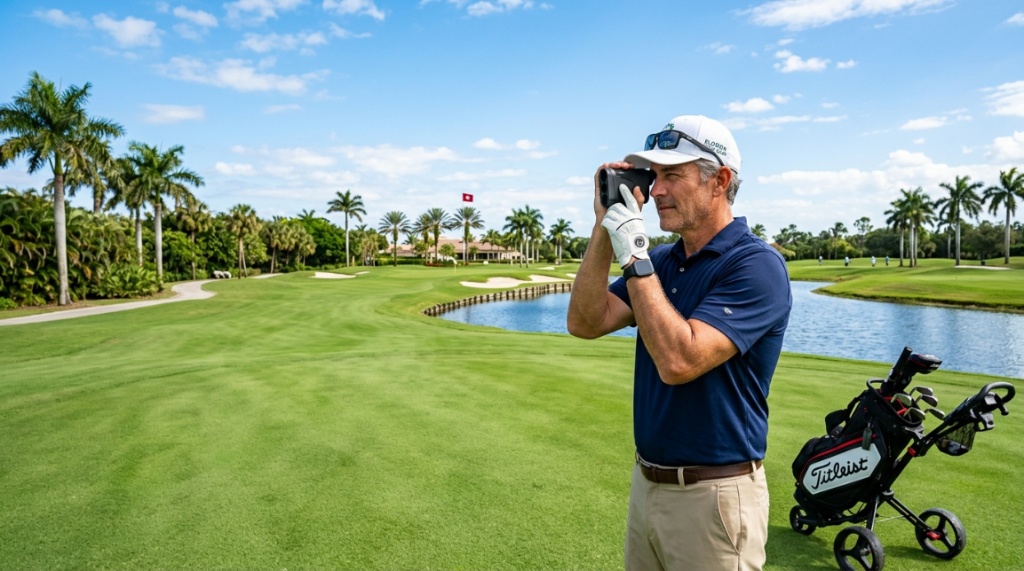
You just booked a sunrise tee time at Streamsong, the air is thick with humidity, and the Bermuda grass glistens with dew. You pull out your rangefinder, but the numbers on the display are dancing because of the heat shimmer and glare. Sound familiar? Finding the top golf rangefinder Florida players rely on isn’t just about zoom; it’s about battling the unique environmental conditions of the Sunshine State—intense glare, extreme heat, and tricky elevation changes. This guide breaks down exactly what features matter most here, helping you choose a device that gives you pinpoint accuracy when you need it most, without blowing your budget.
What Makes Florida Courses Unique for Rangefinder Use?
Florida golf is different. The flat terrain often eliminates the need for massive elevation adjustments, but the environmental obstacles—humidity, water hazards, and dense foliage—create specific challenges. A rangefinder that works in Colorado might fail you here. Understanding these nuances is the first step to making a smart purchase.
The Battle with Glare and Heat Shimmer
The Florida sun is relentless. On clear days, glare off sand traps and water can wash out your targeting reticle. Furthermore, heat radiating from the fairway creates “shimmer,” which distorts distant objects. Look for devices with a high-quality lens coating (like Fully Multi-Coated optics) that minimizes glare. Advanced features like “Target Lock” or “JOLT” technology confirm you’ve hit the flag, not a palmetto bush behind it.
Humidity and Fog: The Invisible Obstacles
High humidity creates a dense atmosphere that can scatter the laser beam. Cheaper rangefinders often struggle to get a reading past 150 yards in these conditions. If you frequently play early mornings or late afternoons when fog rolls in off the coast, you need a unit with a higher maximum range rating (like 600+ yards) to ensure you get a reading on the flag, not just the front fringe.
Where You Play Matters: Coastal vs. Inland Courses
A links course in Naples will have different challenges than a tree-lined parkland course in Orlando. Coastal courses demand better waterproofing and corrosion resistance due to salt air. Inland courses require a rangefinder with a “Scan” mode to quickly pick out specific trees or bunkers. Prioritize devices with an IPX4 water-resistant rating or better to handle sudden summer downpours.
How Does Slope Technology Work on Florida’s Flat Terrain?
While Florida is flat, slope is still relevant. A 3-foot elevation change over 150 yards can affect your club selection by half a club. Slope technology uses an internal sensor to calculate the angle and provide an adjusted distance. It is a game-changer for players who want to know their exact “playing distance,” but it comes with a critical rule caveat.
Why You Need a Switch or a Tournament Lock
If you plan to play competitive amateur events, slope features are illegal. Models like the Bushnell Tour V5 Shift feature a physical switch that disables the slope function, making the device legal for tournament play. Always buy a rangefinder with a slope feature that can be turned off easily; otherwise, you’re purchasing a practice-only tool that harms your scoring in sanctioned events.
Is Slope Worth the Extra Price Tag?
For the average Florida club golfer, yes. Knowing that a shot is actually playing 154 yards, not 150, helps dial in your distances. Most golfers overestimate the effect of subtle elevation changes. A slope rangefinder eliminates the guesswork, allowing you to trust your swing and commit to the shot, which is vital on fast, firm Florida greens.
Understanding “Effective Distance” vs. “Actual Distance”
Actual distance is the straight-line measurement. Effective distance considers the incline or decline. On Florida courses built on old landfill sites (like those in the Miami area), you might face 15-foot mounds. Here, slope is crucial. An effective distance reading tells you the distance the ball will travel, helping you avoid short-sided yourself or flying the green entirely.
Which Features Are Essential for Florida Golfers?
Not all features are created equal. While a fancy DNA scan for the flag is nice, certain technical specifications are non-negotiable for Florida conditions. Focus on the core hardware that ensures speed and accuracy, not just flashy marketing gimmicks.
Fast Acquisition Speed for Rusty Swings
Florida heat makes you tired, and a slow rangefinder hurts your pace of play. Look for units with “Pulse” or “Speed” technology that deliver readings in under a second. If you have to hold the button for three seconds to get a number, you’re wasting energy and time. A fast lock is essential.,If you love analyzing course management, wind maps, and environmental numbers out on the links, you might also enjoy practicing your game digitally during the off-season or rainy days. Make sure your hardware can keep up with heavy graphic software before upgrading your setup by reviewing the essential Golf Simulator Laptop Requirements Before You Buy. Waterproofing and Fog Mode Resistance
Look for a minimum IPX4 rating. This ensures the case is sealed against splashes from any angle—perfect for when you’re retrieving a ball from a water hazard or caught in a sudden drizzle. Additionally, a dedicated “Fog Mode” utilizes a different signal processing algorithm to penetrate mist, giving you a number when others can’t.
Magnification: 6x vs 7x vs 8x
While 6x magnification is standard, 7x offers a slightly larger field of view, making it easier to locate your target on wide-open Florida courses. However, higher magnification often means a narrower field of view, making it harder to find the flag if you shake. I recommend 6x or 7x for the best balance of stability and target acquisition in windy conditions.
How To Choose Between a Rangefinder and a GPS Watch?
This is the eternal debate. In Florida, the answer often depends on your course layout. GPS watches (like the Garmin S62) show distances to hazards and the front/middle/back of the green. Rangefinders provide exact distances to the pin. For the competitive scorer, a rangefinder is superior because it provides yardages to any object, not just the green.
When to Use a Rangefinder (The Winning Edge)
If you are playing a course with tucked pins behind bunkers (very common in Florida), a rangefinder lets you aim at the flag or the bunker edge with precision. You can also shoot the tree line to lay up perfectly. It offers a level of precision that a GPS watch cannot match, helping you attack pins aggressively.
When a GPS Watch Wins (Convenience)
If you play unfamiliar courses often, a GPS watch gives you instant, no-look distances to hazards you cannot see from the tee box. It is faster and doesn’t require a battery-draining laser. However, in the humid Florida heat, rangefinders typically outperform watches regarding accuracy to the actual pin placement.
Should You Carry Both?
No. You only need one. If you are a data nerd, a rangefinder is the superior tool. If you are a casual player who wants to know how far the water is, a GPS watch is fine. I recommend a rangefinder to the majority of readers because it offers the best combination of precision and versatility for scoring.
Which is the Best Rangefinder Brand for Humid Climates?
When comparing brands, look at historical durability in coastal regions. Brands like Bushnell, Callaway, and Precision Pro invest heavily in waterproofing and anti-fog coatings. Reading customer reviews from Florida residents specifically can reveal which models hold up after a year of salty, humid conditions.
Bushnell: The Industry Standard
The Bushnell Tour V6 Shift is arguably the gold standard. It features a slope switch, and its “BITE” magnetic cart mount is incredibly handy. More importantly, its internal components are sealed to resist moisture. It is expensive, but for the serious golfer, it is an investment in reliability.
Callaway and Precision Pro: Great Value Alternatives
Callaway’s 300 Pro is lighter and cheaper, but still offers excellent clarity. Precision Pro’s NX7 Pro is a favorite among mid-handicappers because it offers slope and a lifetime battery replacement warranty. Both brands have proven track records in the humid Southeast U.S., providing excellent value without sacrificing essential features.
Why You Should Avoid Cheap No-Name Brands
While budget options are tempting, their internals fail quickly in Florida’s heat. The lasers dim, the displays fog up, and the readings become unreliable. You are better off buying a previous-generation model from a top brand than a current-season cheap knock-off. Durability is critical for tropical climates.
| Feature | Bushnell Tour V6 Shift | Callaway 300 Pro | Precision Pro NX7 Pro |
|---|---|---|---|
| Slope Switch | Yes (Physical) | Yes (Physical) | Yes (Internal) |
| Waterproof Rating | IPX4 | IPX4 | IPX4 |
| FlagLock | Yes (JOLT) | Yes (Pulse) | Yes (Vibration) |
| Price (approx) | $399 | $249 | $299 |
How to Use a Rangefinder Effectively in Florida Wind?
The wind is a constant factor, especially on the west coast. A rangefinder cannot measure wind speed, but it tells you the exact yardage you need to adjust. To use it effectively, you must understand how wind interacts with your ball flight—not just the simple “into or downwind” rule.
Crosswinds vs. Headwinds on Flat Courses
On a flat track, a 10 mph headwind can knock your shot 5-10 yards short. Conversely, a downwind helps the ball run. Use your rangefinder to get the number, then apply the wind multiplier. For example, into a stiff breeze, take two more clubs and swing easy; downwind, take one less club. The rangefinder provides the base number, not the final answer.
Using the Range to Hit “Stinger” Shots
When facing a strong Gulf breeze, precision matters. Shoot the front of the green and the pin. If the pin is at the back, you might want to hit a “stinger” shot that lands short and rolls out. The rangefinder gives you the landing area. This helps you visualize the trajectory required, avoiding the high, spinny shots that balloon in the wind.
Accounting for the “Florida Distance” Effect
Because courses are near sea level, the air is denser. The ball does not travel as far as it does in Denver. Most rangefinders do not measure this. So, when your rangefinder says 150 yards, it is measuring the distance, but the air density might make the ball fly shorter. You might need to club up slightly compared to your normal “sea level” calculations.
Is It Legal to Use a Rangefinder in Florida Tournaments?
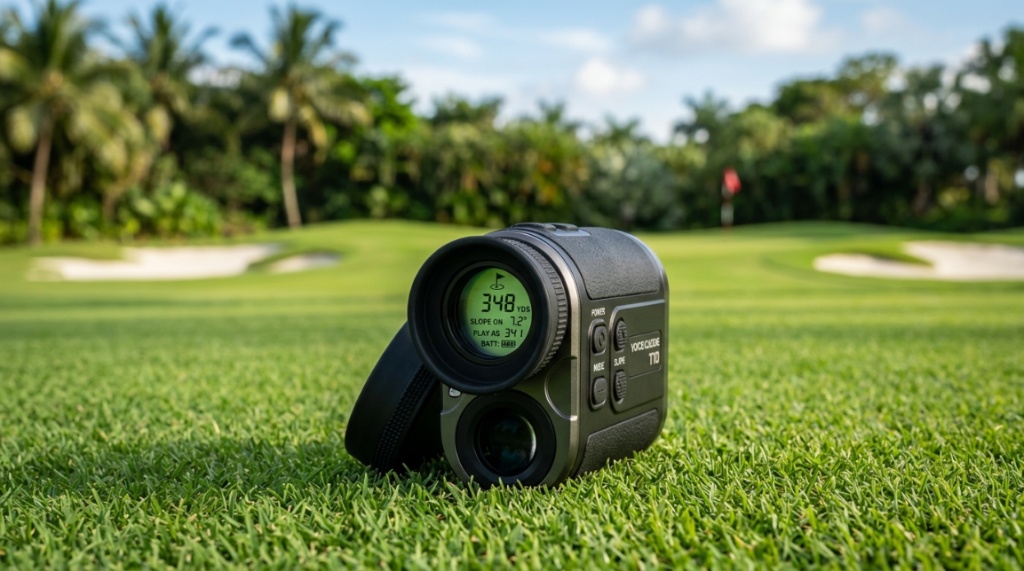
Yes, but only if you are using a device that does not measure wind, temperature, or slope—or if the slope feature is switched off. The USGA rules regarding local rules allow rangefinders, but they must be used according to the “Conditions of Competition.” Always check the specific local rules of your club or state tournament.
The “Slope Off” Rule Explained
Most modern rangefinders have a “Legal” or “Tournament” mode. If your device has slope, you MUST disable it during a competitive round. If you fail to do so, you are disqualified. There is no discretion. Even if you think it doesn’t help, the rule is strict. Practice turning it off before your round!
Checking the USGA Handicap System
For handicap purposes, you can use slope rangefinders in casual rounds. However, when you post a score for handicap, you should not have used slope data for the actual shot. It is an integrity issue. Most players just turn it off to avoid using information that is not permitted in the spirit of the game.
Penalties for Using Illegal Features
Using a slope feature during a qualifying round carries a two-stroke penalty per hole, or a disqualification if discovered late. It is not worth ruining your scorecard. Plus, if you practice with slope and then play without it, your distance judgment will be off. Train as you play.
When Should You Purchase a New Rangefinder?
The best time to buy is during the “shoulder season” (September or March) when golf retail stores clear out inventory for new models. You can often find last year’s flagship model at a heavy discount. Avoid buying right before major holidays when prices are inflated due to demand.
Signs Your Current Rangefinder is Failing
If you are constantly missing the flag by 5+ yards, or if the display fades in bright sunlight, it is time for a replacement. Also, if the buttons start to stick due to salt corrosion, you are losing internal integrity. Don’t trust worn-out equipment for important shots.
New Technology to Keep on Your Radar
The latest trend is “adaptive slope” which factors in temperature and barometric pressure. While this is banned for tournament play, it is excellent for practice. If you see a unit with this feature at a good price, it is a great practice tool for learning how far the ball flies in different Florida conditions.
Budgeting for the Future
Expect to spend between $200 and $400 for a high-quality unit that will last 5+ years. The top golf rangefinder Florida golfers swear by often falls in this range. Spending less means risking poor durability, while spending more yields marginal performance gains unless you are playing professionally.
What Accessories Are Essential for Florida Golfers?
Investing in the right accessories ensures your rangefinder remains functional through the summer rains and is always within reach. A slipping rangefinder can cost you a shot or a broken device. Choose accessories that enhance grip and securing methods.
Magnetic Mounts for Cart Riders
Many Florida courses are wide-open, and riding carts is common. A magnetic cart mount (like the Bushnell BITE) allows you to securely attach your rangefinder to the cart’s metal bar. This prevents it from rattling around in the cup holder and keeps it accessible for quick use without fumbling in your bag.
Neoprene Cases vs. Hard Cases
Neoprene cases are lightweight and fit easily in your bag’s pocket, but they offer minimal impact protection. Hard cases are bulkier but provide superior crush protection. In Florida, where you might toss your bag in the trunk with other gear, I recommend a hard case to protect the internal lenses from sudden bumps.
Cleaning Kits for Beach Sand and Salt
Sand and salt are abrasive. Keep a microfibre cloth and a small lens pen in your bag. After each round, wipe down the exterior to remove salt residue. Never wipe a dirty lens; blow off the dust first, or you will scratch the coating, permanently ruining your clarity.
Frequently Asked Questions
Quick answers to the most common questions from Florida golfers.
Can a rangefinder really help my score in Florida?
Yes. By knowing exact distances to bunkers and pins, you can avoid costly mistakes like flying the green into a water hazard. The precision translates to better club selection and closer approach shots.
Is the slope feature worth paying extra for?
For daily play, yes. It helps you learn how distance changes with subtle elevation. Just ensure you buy a model switchable to legal mode for competitions. If you only play tournaments, skip the slope to save money.
What is the ideal magnification level for a rangefinder?
6x to 7x is ideal. It provides a wide enough field of view to find the flag easily and a stable enough image to prevent dizziness. Higher magnification like 8x can be too shaky on hot days.
Do cheap rangefinders work well in high humidity?
Usually, no. They lack the internal sealing and lens coatings to fight glare and moisture. They often show errors or fail to lock onto the flag beyond 100 yards.
How often should I calibrate my rangefinder?
Most models are internally calibrated. However, if you drop it, you should test it against a known distance. If you notice consistent discrepancies, send it to the manufacturer for servicing.
Conclusion
Finding the top golf rangefinder Florida golfers trust involves looking past the hype and focusing on how the device handles glare, heat, and humidity. The right unit should boost your confidence on every shot, whether you are attacking a short par 4 or carrying the water on a long par 5. Prioritize a rugged build, fast speed, and a reliable slope switch. With the right tool in your hands, you’ll be better equipped to navigate the challenges of Florida golf and start posting lower scores. Take your time, compare the specs, and make the investment that fits your game. You won’t regret it.