
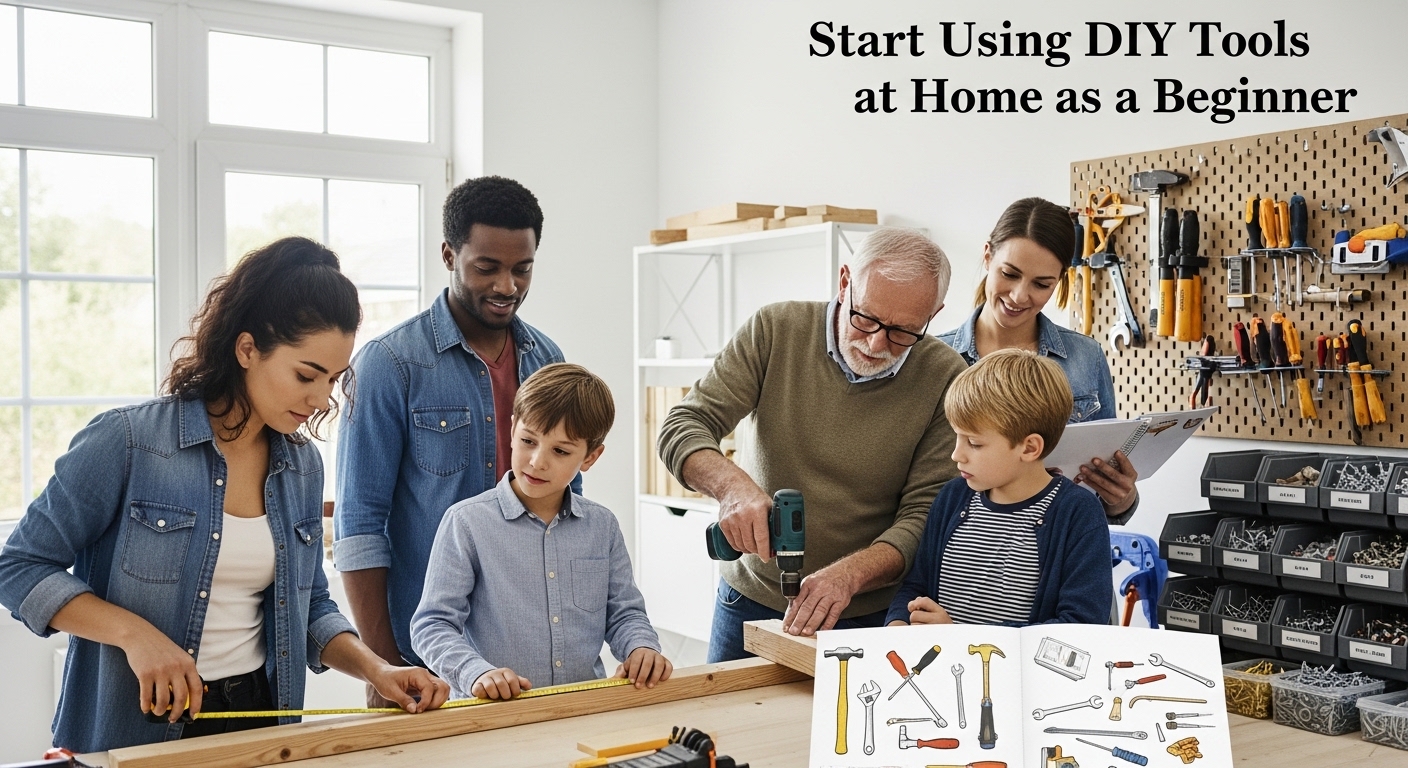
DIY tools for beginners are simple, safe, and essential hand tools that help you handle everyday home repairs without professional help. These include a hammer, screwdriver set, measuring tape, utility knife, pliers, and cordless drill. Learning how to use them saves money, builds confidence, and improves your ability to maintain your living space.
Many people avoid home repairs because they think tools are complicated. The real problem is not tools. It is uncertainty. A loose cabinet handle stays loose. A leaking tap keeps dripping. A broken shelf remains unused. Over time, these small issues become expensive problems.
Starting with basic DIY tools changes that. You gain control over your home. You reduce maintenance costs. You also develop practical skills that stay useful for life.
A beginner-friendly approach does not require a workshop or technical background. It only requires the right starter tools, simple safety habits, and a step-by-step learning plan. This guide explains exactly how to begin using DIY tools at home with confidence.
Why should beginners learn to use DIY tools at home?
Beginners should learn DIY tools because they reduce repair costs, improve independence, and increase home safety.
Many homeowners delay small repairs. That delay increases long-term maintenance expenses. For example, a loose hinge can damage a cabinet frame if ignored. A minor wall crack can expand over time.
Learning basic tool skills solves these issues early.
According to industry home improvement behavior studies, households that perform small repairs themselves reduce maintenance costs by up to 30% annually. Even simple fixes like tightening screws or sealing gaps prevent larger structural problems later.
Here is what beginners gain immediately:
- Confidence in handling small repairs
- Reduced dependency on technicians
- Lower maintenance expenses
- Improved household safety
- Better organization and storage solutions
DIY skills are practical life skills. They grow stronger with practice.
What basic DIY tools should every beginner own first?
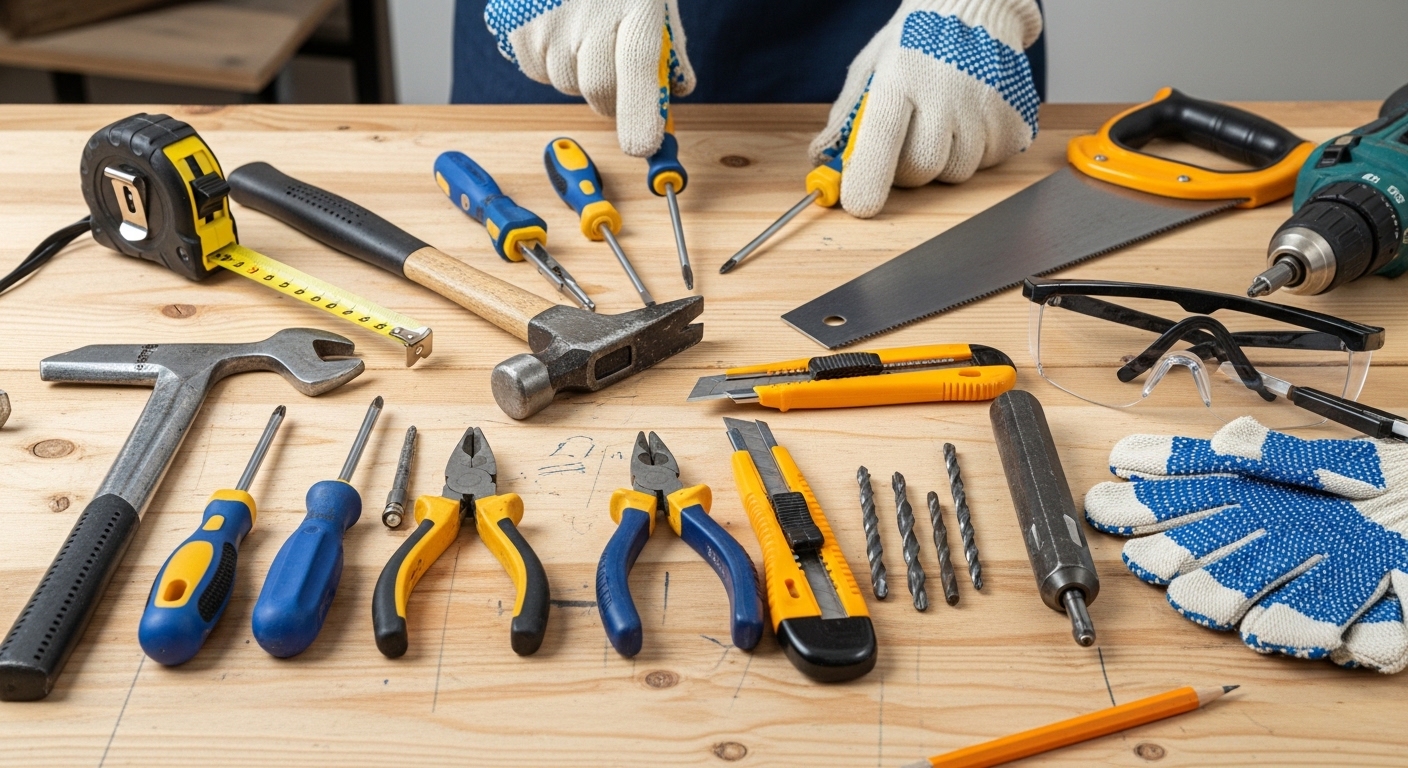
The best DIY tools for beginners include a hammer, screwdriver set, pliers, measuring tape, utility knife, adjustable wrench, and cordless drill.
You do not need a large toolbox to begin. Start small and upgrade gradually.
| Tool | Purpose | Beginner Use Example |
|---|---|---|
| Hammer | Driving nails | Hanging wall frames |
| Screwdriver Set | Tightening screws | Fixing cabinet handles |
| Pliers | Holding objects | Bending wires |
| Measuring Tape | Accurate measurement | Furniture placement |
| Utility Knife | Cutting materials | Opening packages |
| Adjustable Wrench | Tightening bolts | Fixing plumbing fittings |
| Cordless Drill | Drilling holes | Installing shelves |
This toolkit supports most beginner-level home repair tasks.
How can beginners safely start using DIY tools at home?
Beginners can safely use DIY tools by wearing protective gear, choosing the right tool, and practicing on simple tasks first.
Safety builds confidence. Confidence improves results.
Follow these safety habits:
- Wear gloves while handling sharp tools
- Keep tools dry and clean
- Use correct tool sizes
- Store tools properly after use
- Work in well-lit areas
Start with simple projects like tightening screws or assembling furniture. Avoid electrical repairs at the beginning stage.
Small steps reduce mistakes.
How do you choose the right DIY tools for beginners?
Choose beginner DIY tools based on comfort, durability, and frequency of use.
Many people buy large toolkits but rarely use most tools inside them. A better strategy is selecting tools gradually.
Look for these features:
- Comfortable grip handles
- Rust-resistant metal
- Compact storage size
- Lightweight structure
- Trusted brand reliability
A small quality toolkit works better than a large low-quality one.
Always prioritize tools you will use weekly.
What simple DIY projects should beginners try first?
Beginners should start with small projects like fixing loose screws, assembling shelves, sealing wall cracks, and hanging pictures.
These projects build confidence quickly.
Recommended beginner tasks include:
- Installing curtain rods
- Fixing cabinet hinges
- Mounting wall frames
- Repairing door handles
- Organizing storage racks
Each completed task improves tool-handling skills.
Consistency matters more than complexity.
How long does it take to learn basic DIY tool skills?
Most beginners can learn basic DIY tool skills within two weeks through regular practice.
Skill development depends on repetition. Even 15 minutes daily improves control and accuracy.
Week-by-week beginner learning roadmap:
- Week 1: Learn tool identification and safe handling
- Week 2: Practice small home repairs
- Week 3: Install simple fixtures
- Week 4: Complete beginner-level projects independently
Progress becomes visible quickly.
What mistakes should beginners avoid when using DIY tools?
Beginners should avoid using incorrect tools, skipping safety steps, and starting complex repairs too early.
Common beginner mistakes include:
- Using the wrong screwdriver size
- Applying too much pressure while drilling
- Ignoring measurement accuracy
- Working without protective gloves
- Skipping instruction manuals
Avoiding these mistakes saves time and prevents damage.
Can learning DIY tools actually save money at home?
Yes, learning DIY tools significantly reduces repair expenses and improves long-term home maintenance efficiency.
Consider a practical example.
A homeowner faced repeated cabinet hinge issues. Instead of calling a technician three times per year, they learned to tighten hinges using a screwdriver. The fix took five minutes each time.
Annual technician cost avoided: approximately equal to several household tool purchases.
Similar savings apply to:
- Furniture assembly
- Wall mounting tasks
- Minor plumbing adjustments
- Storage installation
DIY tools convert recurring expenses into one-time investments.
Where should beginners store DIY tools at home?
Beginners should store DIY tools in a dry toolbox placed in an accessible but safe location.
Proper storage improves tool lifespan.
Ideal storage locations include:
- Bedroom storage cabinets
- Utility shelves
- Kitchen service areas
- Closet organizers
A labeled toolbox prevents misplacement.
How can beginners build confidence while using DIY tools?
Confidence grows through repetition, simple project success, and gradual skill expansion.
Start with tasks that produce visible results quickly.
Confidence-building strategies include:
- Practicing one task weekly
- Watching short demonstration guides
- Maintaining a small tool checklist
- Tracking completed repairs
Every completed repair increases independence.
Are cordless tools better for beginners than manual tools?
Yes, cordless tools are often easier for beginners because they reduce effort and increase efficiency.
However, manual tools remain essential.
Best beginner cordless tool:
- Cordless drill driver
This single tool handles multiple household repairs.
Use manual tools for precision. Use cordless tools for speed.
Conclusion: How can you start using DIY tools at home today?
Starting with DIY tools does not require technical experience. It requires a simple decision to begin. Most home repairs are smaller than they appear. A loose screw. A hanging frame. A storage rack installation. These are beginner-friendly tasks.
When you build a small toolkit and practice weekly, confidence develops naturally. Over time, you stop depending on outside help for everyday repairs. That independence saves money and improves home safety.
The best way to begin is to choose three tools today: a screwdriver set, measuring tape, and hammer. Use them this week on one simple repair task inside your home.
Start small. Practice regularly. Build your confidence step by step. Your future self will thank you for learning this skill early.
FAQs About DIY Tools for Beginners
What are the easiest DIY tools for beginners to learn first?
The easiest DIY tools for beginners include a hammer, screwdriver set, measuring tape, and pliers. These tools support most everyday home repair tasks.
Do beginners need expensive DIY tools to start?
No. Beginners only need basic, durable tools. A small starter toolkit is enough for most home maintenance jobs.
Is it safe to use DIY tools without training?
Yes. Basic tools are safe when used correctly. Follow safety instructions, wear gloves, and begin with simple projects.
How often should beginners practice DIY tool skills?
Practicing once or twice per week helps beginners improve quickly. Consistent use builds confidence and accuracy.
Can DIY tools help renters as well as homeowners?
Yes. Renters benefit from DIY tools for furniture assembly, wall mounting alternatives, storage installation, and small adjustments.
Which cordless tool should beginners buy first?
A cordless drill driver is the most useful first power tool. It handles drilling, tightening screws, and installing shelves efficiently.
Read More How to Find the Best Budget Grill
Learn More How to Use a Telescopic Fishing Rod Combo

