
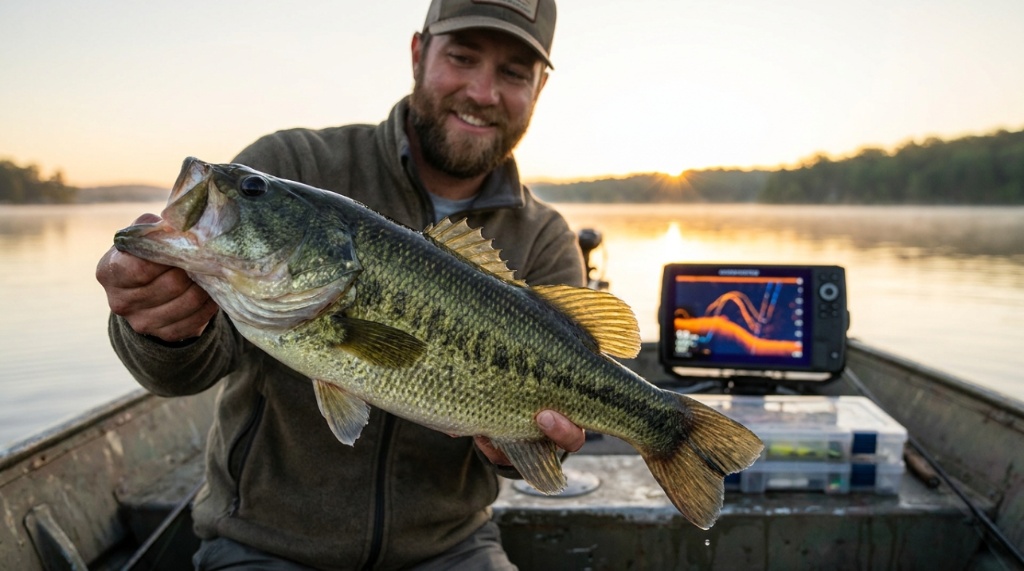
How Do Sonar Fish Finders Work to Detect Fish and Depth?
Sonar fish finders use sound waves to measure depth and locate fish, structures, and the bottom contour. They emit a pulse of sound (ping) from the transducer, which travels through the water and bounces back when it hits an object. The device calculates the time it takes for the echo to return, converting it into depth and fish location data.
Here’s a step-by-step breakdown of how it works:
- Transducer emits a sound wave: The transducer, usually mounted on the hull or a trolling motor, sends out a high-frequency sound wave (typically between 50 kHz and 200 kHz).
- Sound waves travel through water: The waves move at approximately 4,800 feet per second in freshwater (slightly faster in saltwater).
- Wave hits an object: When the sound wave encounters a fish, the bottom, or a structure (like a rock or weed bed), it reflects back toward the transducer.
- Echo returns to the transducer: The device measures the time it takes for the echo to return.
- Data is processed: The fish finder calculates the distance based on the speed of sound in water and displays the information on the screen as a graph, chart, or 3D image.
Fun fact: The term “sonar” stands for SOund Navigation And Ranging. It’s the same technology used by submarines and ships to navigate underwater.
People also ask: Can a fish finder distinguish between fish and other objects?
Yes, but it depends on the device’s resolution and frequency. High-frequency sonar (e.g., 200 kHz) provides better detail for small fish and shallow water, while low-frequency sonar (e.g., 50 kHz) penetrates deeper but with less detail.
How Accurate Are Fish Finders in Measuring Depth?
Most modern fish finders are accurate within 1–3% of the actual depth in ideal conditions. For example, if you’re fishing in 100 feet of water, a high-quality fish finder will typically measure the depth with an error margin of just 1–3 feet.
However, several factors can affect depth accuracy:
- Water temperature: Sound travels faster in warmer water, which can slightly alter depth readings. Some advanced fish finders include temperature sensors to compensate for this.
- Salinity: Saltwater is denser than freshwater, so sound travels about 3% faster in saltwater. If your device isn’t calibrated for saltwater, it may underestimate depth.
- Transducer placement: If the transducer isn’t properly mounted (e.g., at an angle or too high above the water), it can skew readings. For best results, mount it parallel to the water’s surface.
- Water turbulence: Waves, currents, or aerated water (e.g., near a waterfall) can scatter sound waves, reducing accuracy.
- Device quality: Entry-level fish finders may have a margin of error up to 5–10%, while high-end models (e.g., Garmin, Lowrance, or Humminbird) can achieve near-perfect accuracy.
Pro tip: To test your fish finder’s accuracy, drop a weighted line with a known length into the water and compare it to the device’s reading. Adjust the settings if there’s a consistent discrepancy.
People also ask: Can a fish finder work in shallow water?
Yes, but you may need to adjust the sonar frequency. High frequencies (192–200 kHz) are ideal for shallow water (under 100 feet), while low frequencies (50–83 kHz) are better for deeper water.
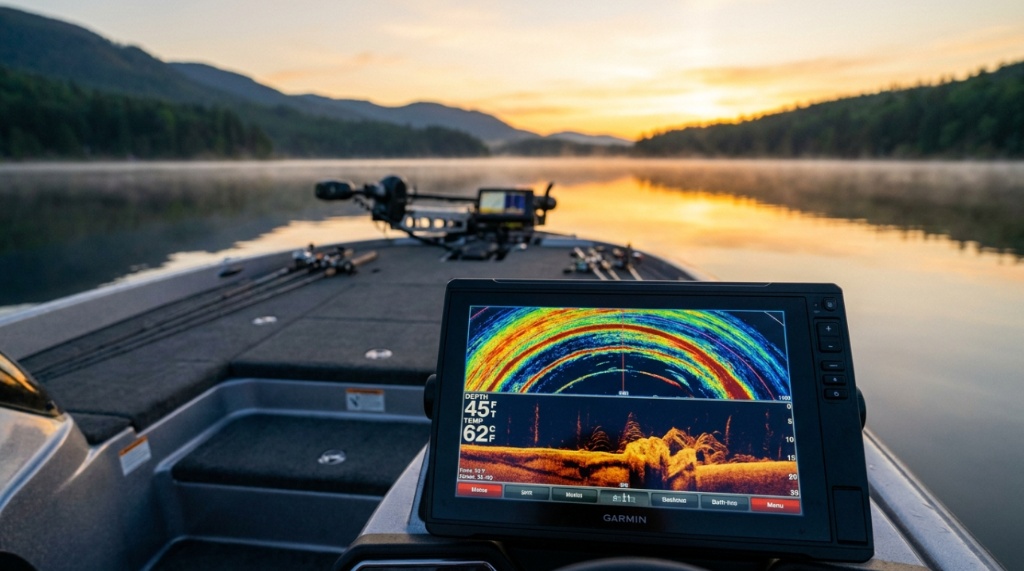
What Affects the Accuracy of Fish Detection on a Fish Finder?
Fish finders detect fish by interpreting the strength and shape of the returning echo, but their accuracy depends on fish size, depth, and sonar settings. Larger fish and those closer to the transducer produce stronger echoes, making them easier to detect.
Here’s what impacts fish detection accuracy:
| Factor | Impact on Accuracy | How to Improve |
|---|---|---|
| Fish size | Smaller fish may not reflect enough sound to register. | Use high-frequency sonar (200 kHz) for better resolution. |
| Fish depth | Fish near the surface or bottom may blend into the background. | Adjust sensitivity and use a narrow sonar cone angle. |
| Sonar frequency | Low frequencies penetrate deeper but lack detail. | Use dual-frequency or CHIRP sonar for versatility. |
| Water clarity | Murky water scatters sound waves, reducing accuracy. | Use a higher power output (e.g., 500W or more). |
| Transducer cone angle | Wider cones cover more area but with less precision. | Use a narrow cone (e.g., 10–20 degrees) for targeted fishing. |
Real-world example: A study by Sport Fishing Magazine found that CHIRP (Compressed High-Intensity Radar Pulse) sonar can detect fish as small as 1 inch in length, while traditional sonar struggles with fish under 4–6 inches.
People also ask: Why does my fish finder show fish that aren’t there?
False readings can occur due to thermoclines (temperature layers in the water), air bubbles, or debris. To minimize this, use a device with noise rejection features and adjust the sensitivity.
How to Choose a Fish Finder for Maximum Accuracy?
To get the most accurate results, prioritize devices with CHIRP sonar, high resolution, and adjustable settings. Here’s what to look for when selecting a fish finder:
Key Features for Accuracy
- CHIRP Sonar: Uses a continuous sweep of frequencies to provide clearer, more detailed images of fish and structure. Ideal for both shallow and deep water.
- Dual or Multiple Frequencies: Allows you to switch between high and low frequencies depending on the depth and conditions. For example, 200 kHz for shallow water and 50 kHz for deep water.
- High Resolution: A higher pixel count (e.g., 800×480 or better) ensures sharper images, making it easier to distinguish fish from other objects.
- Adjustable Sensitivity: Lets you fine-tune the device to filter out noise and focus on fish echoes.
- GPS Integration: Helps you mark productive fishing spots and return to them later with pinpoint accuracy.
- Transducer Quality: A high-quality transducer with a wide frequency range (e.g., 50–200 kHz) improves both depth and fish detection accuracy.
Top Picks for Accuracy
Based on expert reviews and user feedback, here are some of the most accurate fish finders on the market:
| Model | Type | Max Depth | Frequency | Best For |
|---|---|---|---|---|
| Garmin Striker Plus 7 SV | CHIRP + SideVu | 2,300 ft | 50/77/200 kHz | Versatile freshwater/saltwater |
| Lowrance HOOK Reveal 9 | CHIRP + DownScan | 3,000 ft | 83/200 kHz | Deep water, professional use |
| Humminbird HELIX 7 CHIRP GPS G3 | CHIRP + Side Imaging | 1,500 ft | 455/800 kHz | High-resolution imaging |
| Deeper PRO+ | Portable CHIRP | 260 ft | 290 kHz | Kayak/ice fishing |
For a detailed comparison, check out this guide on the best fish finder for depth accuracy.
People also ask: Is a more expensive fish finder always more accurate?
Not necessarily. While high-end models often have better resolution and features, even mid-range fish finders can deliver excellent accuracy if they have CHIRP sonar and a good transducer.
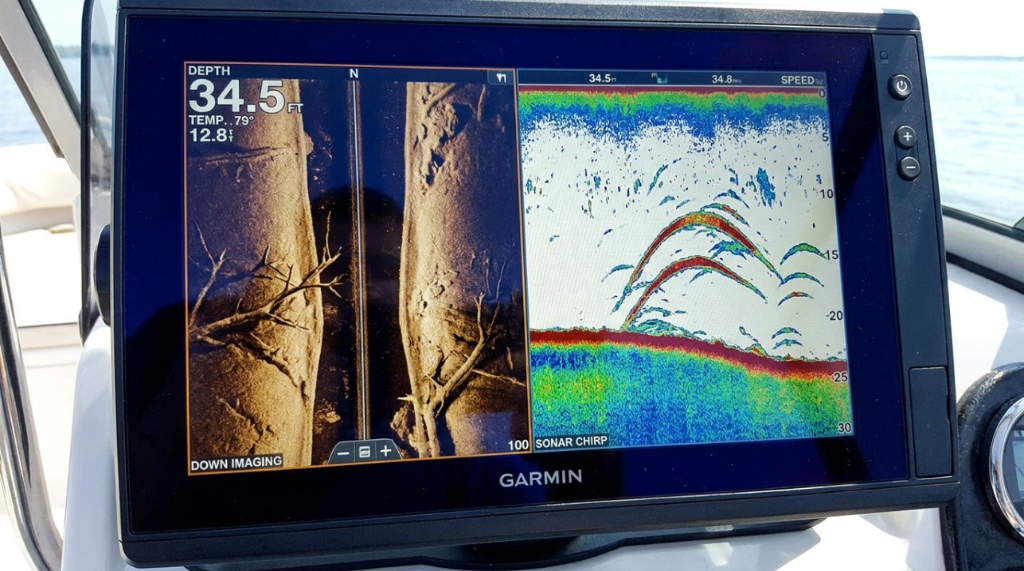
How to Improve the Accuracy of Your Fish Finder?
Calibrate your device, optimize settings, and use it correctly to maximize accuracy. Even the best fish finder won’t perform well if it’s not set up properly. Follow these tips to get the most reliable readings:
- Mount the transducer correctly: Place it in a location where it has unobstructed contact with the water. For hull-mounted transducers, use a fairing block to reduce turbulence.
- Adjust the sensitivity: Start with a mid-range sensitivity setting and tweak it based on water conditions. Too high, and you’ll pick up noise; too low, and you’ll miss fish.
- Use the right frequency: Switch to high frequency (192–200 kHz) for shallow water and low frequency (50–83 kHz) for deep water.
- Calibrate for water conditions: If your fish finder has a manual calibration option, adjust it for freshwater or saltwater based on where you’re fishing.
- Avoid interference: Turn off other electronic devices (e.g., trolling motors, radios) that might interfere with the sonar signal.
- Keep the transducer clean: Algae, dirt, or barnacles on the transducer can weaken the sonar signal. Clean it regularly with freshwater.
- Update the software: Manufacturers often release firmware updates to improve performance and accuracy. Check for updates regularly.
Pro tip: If you’re fishing in a new area, start by scanning the bottom to identify structures like rocks, weeds, or drop-offs. This will help you interpret fish echoes more accurately. Funding your outdoor adventures doesn’t have to break the bank. Once you master your local waters, you might find yourself dreaming of the ultimate fishing hotspots across the globe. Exploring what is destination travel in the world can open doors to incredible international fishing coordinates. If you need extra capital to fund these excursions or upgrade to top-tier sonar tech, learning how to earn money fast without investing much time is an excellent way to boost your gear budget without sacrificing your precious time on the water.
People also ask: Can I use my fish finder in winter?
Yes, but cold water can slow down the speed of sound, slightly affecting depth readings. Some ice-fishing fish finders are specifically designed for cold-weather use.
Ready to catch more fish? Grab your gear, hit the water, and put your newfound knowledge to the test. Tight lines!
Frequently Asked Questions
Do fish finders work in all types of water?
Yes, but their performance varies. Fish finders work in freshwater, saltwater, and even ice (with a portable transducer). However, saltwater can slightly reduce accuracy due to its density, and very murky water may scatter the sonar signal.
Can a fish finder tell the difference between fish and bait?
Sometimes, but not always. High-resolution fish finders with CHIRP technology can distinguish between fish and bait if the bait is significantly smaller or has a different echo profile. However, it’s not foolproof—experience and practice help you interpret the readings better.
How deep can a fish finder go?
It depends on the model and power. Portable fish finders typically reach depths of 100–300 feet, while high-end models can penetrate up to 10,000 feet. For most recreational fishing, a device with a max depth of 1,000–3,000 feet is more than sufficient.
Why does my fish finder show a second bottom?
This is usually caused by thermoclines or false echoes. A thermocline is a layer of water where the temperature changes rapidly, which can reflect sonar signals and create a “second bottom” on your screen. To reduce this, adjust the sensitivity or use a device with thermocline rejection.
Can I use a fish finder from a kayak?
Absolutely! Portable fish finders like the Deeper PRO+ or Humminbird PIRANHAMAX 4 are designed for kayak fishing. Mount the transducer on the side or back of the kayak, or use a portable, castable model that you can toss into the water.
How often should I update my fish finder’s software?
Check for updates at least once a year. Manufacturers release updates to fix bugs, improve accuracy, and add new features. Updating your device ensures it performs at its best.


